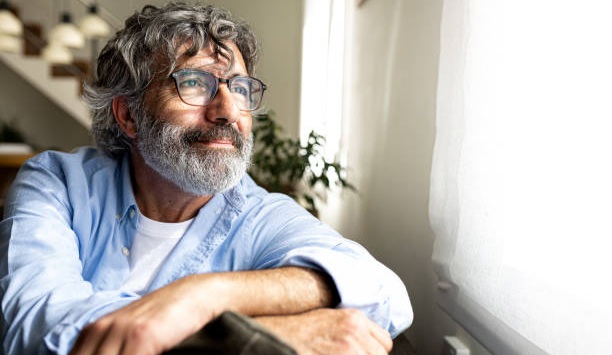
Getting older is strange because it happens so gradually that you barely notice it at first. One day you are making long-term plans like you have endless time ahead of you, and the next you are standing up carefully because your knees suddenly disagree with your enthusiasm.
Most conversations about aging focus on retirement, pensions, travel plans, or financial security. People talk about slowing down and “enjoying life.” But very few people talk honestly about what aging actually feels like from the inside. Nobody explains what happens when your body starts changing while your mind still feels exactly the same.
That disconnect can be shocking.
Many men reach their sixties thinking they are prepared for aging, only to discover that the hardest parts are not always the dramatic ones. Often, it is the smaller emotional and physical changes that quietly reshape everyday life.
These are the harsh truths many 65-year-old men experience but rarely discuss openly.
1. Your Body Changes Whether You Accept It or Not
This is probably the hardest truth for most men to accept.
You can do everything correctly for years. You can exercise regularly, eat healthy meals, lift weights, stay active, and avoid bad habits. Yet eventually your body still starts changing in ways you cannot fully control.
That realization can feel deeply frustrating because most men spend their younger years believing discipline alone can stop aging. Unfortunately, aging does not negotiate.
Joints begin to ache without warning. Recovery takes longer than it used to. Energy levels fluctuate more often. Even small physical problems suddenly become recurring issues instead of temporary inconveniences.
Many men notice their relationship with food changes too. Foods they once ate without thinking suddenly create discomfort or digestive issues. Health conditions that once seemed distant become personal realities.
Simple things begin to carry emotional weight.
A routine eye appointment may reveal early cataracts. An occasional pain in the hands or knees might turn into arthritis flare-ups. Even walking long distances can sometimes feel different than it did just a few years earlier.
The difficult part is not simply the physical discomfort. It is realizing your body no longer feels completely predictable.
That realization changes how you think about time, health, and daily life.
2. You Start Losing People You Thought Would Always Be There
Nothing changes a person quite like loss.
When you are younger, parents often feel permanent. Even though you know logically they will not live forever, emotionally it is difficult to imagine life without them.
Then one day, that reality arrives.
For many men in their sixties, losing parents becomes one of the defining emotional experiences of aging. It forces you to confront mortality in a deeply personal way.
But it does not stop there.
As the years pass, losses become more common. Friends develop health problems. Former coworkers pass away. Relatives disappear from family gatherings one by one. Familiar faces slowly become memories.
Each loss carries a quiet reminder that life is temporary.
That awareness changes how you see everything around you. Conversations matter more. Time with loved ones feels more valuable. Even ordinary moments begin carrying emotional significance because you understand they will not last forever.
Aging teaches you that nothing remains unchanged forever, including the people you love most.
3. Time Starts Moving Much Faster
This is one of the strangest parts of getting older because it is difficult to explain to younger people.

At some point, years stop feeling long.
Birthdays seem to arrive every few months. Christmas comes around unbelievably fast. Entire seasons disappear before you fully process them.
You begin asking yourself questions like:
YOU MAY LIKE



- “Wasn’t that only last year?”
- “Where did the time go?”
- “How is it already May again?”
Of course, time itself has not changed. A week is still seven days. A month is still a month.
What changes is your perspective.
When you are young, every year represents a large percentage of your life experience. Everything feels new, slow, and memorable. But by the time you reach 65, your brain processes time differently because you have already lived through decades of routines, responsibilities, and repeated patterns.
The result is unsettling.
You suddenly realize how precious ordinary days really are. You stop assuming there will always be more time later. Moments begin to matter more because you understand how quickly they disappear.
That awareness can feel uncomfortable, but it can also make life richer and more meaningful.
4. Your Mind Still Feels Young Even When Your Body Does Not
This may be one of the biggest emotional shocks of aging.
Inside your mind, you still feel like yourself. Your personality remains familiar. Your thoughts, humor, interests, and memories all still feel young.
Yet your body starts sending very different messages.
You wake up stiff. Your back complains after small tasks. Your knees ache randomly. Energy disappears faster than it used to. Injuries that once healed quickly now linger for weeks.
The disconnect between mind and body becomes impossible to ignore.
Mentally, many 65-year-old men still feel capable of doing everything they did decades earlier. Physically, reality often disagrees.
That gap creates frustration because your expectations remain youthful while your body becomes less reliable.
Even worse, aging often introduces random physical setbacks that seem to appear without explanation. One week it is shoulder pain. Another week it is hip stiffness or foot discomfort.
These reminders accumulate over time.
You gradually realize that although your identity feels unchanged, your body operates under completely different rules now.
5. Society Slowly Starts Treating You Like You Are Invisible
This truth catches many men completely off guard.
Most people expect wrinkles, gray hair, and physical aging. Few expect the social changes that come with getting older.
At some point, many older men notice they are interrupted more often in conversations. Younger people talk over them or dismiss their opinions faster. They feel less visible in professional spaces and social environments.
The strange part is that internally, they have not changed much at all.

The experience can damage confidence because it feels unexpected and deeply personal.
In professional life, this shift can become especially obvious. A man who once felt respected and relevant may slowly notice fewer opportunities appearing. The age gap between him and younger colleagues grows wider each year.
Eventually, he may realize he is old enough to be the father of the people now leading industries and businesses.
That realization can feel emotionally uncomfortable because society often celebrates youth while quietly overlooking experience.
Many older men struggle with this transition more than they admit publicly.
Still, aging also teaches an important lesson: your value cannot depend entirely on external validation. Respect from others matters, but self-respect matters far more.
6. Your Energy Becomes Something You Protect Carefully
By your sixties, energy no longer feels unlimited.
You begin noticing that certain people, situations, and environments drain you faster than before. Loud drama, unnecessary conflict, and emotionally exhausting relationships become much harder to tolerate.
At first, this can feel like a loss.
You may wonder whether you are becoming less patient, less social, or less interested in the world. But often it is not negativity. It is clarity.
With age comes a stronger understanding of what truly matters.
You stop wasting energy trying to impress everyone. You become more selective about where your attention goes. Meaningful conversations become more important than crowded social events. Peace becomes more attractive than chaos.
As a result, your social circle may become smaller.
But smaller does not necessarily mean worse.
Many older men discover that a quieter life filled with genuine relationships feels far more satisfying than constantly surrounding themselves with noise and superficial connections.
Aging has a way of cutting unnecessary things out of your life whether you planned for it or not.
7. Responsibility Does Not Disappear With Age
Many people assume life becomes easier after retirement age.
The reality is often very different.
Even at 65, responsibilities continue showing up in unexpected ways. In fact, some men feel more emotionally burdened in their sixties than they did earlier in life.
One major reason is family dynamics.
Many older adults now find themselves caring for aging parents, elderly relatives, or in-laws well into their eighties and nineties. At the same time, some are still helping adult children financially or emotionally.
This creates what many call the “sandwich generation.”

Imagine life as three layers:
- The top layer represents aging parents or relatives.
- The middle layer represents you.
- The bottom layer represents children or younger family members.
Many people in their sixties feel squeezed between both ends.
Previous generations often experienced retirement differently because their parents had already passed away before they reached old age themselves. Today, increased life expectancy has changed family responsibilities dramatically.
As a result, life does not always become lighter with age.
Sometimes it simply becomes different.
And sometimes, it becomes heavier.
8. You Do Not Actually Have to “Act Old”
This final truth may be the most important one of all.
Getting older does not automatically mean giving up on life.
Yes, aging brings physical limitations, emotional losses, and uncomfortable realities. But many people confuse aging with surrender, and they are not the same thing.
Some individuals mentally retire long before their bodies force them to. They stop learning, stop exploring, stop staying curious, and slowly disconnect from life itself.
Others choose a completely different path.
There are people in their eighties and nineties who remain deeply engaged with the world. They continue reading, traveling, working, creating, exercising, and forming meaningful relationships. They stay mentally alive because they refuse to define themselves entirely by age.
EDITORS' RECOMMENDATIONS



That choice matters enormously.
Aging may be unavoidable, but disengaging from life is not.
The men who age best are often not the ones with perfect health or endless energy. They are the ones who remain curious, adaptable, and emotionally connected to the world around them.
Conclusion
Growing older is not always easy, and pretending otherwise helps nobody.
There are physical struggles, emotional losses, uncomfortable realizations, and moments that force you to confront your own mortality more honestly than ever before. Yet aging also brings something younger people rarely understand.
Perspective.
You begin recognizing what truly matters and what never deserved your energy in the first place. You become more aware of time, relationships, health, and the importance of living meaningfully instead of simply staying busy.
At 65, life may not feel simpler, but it can feel clearer.
And perhaps that clarity is one of the few gifts aging gives in return for everything it takes away.