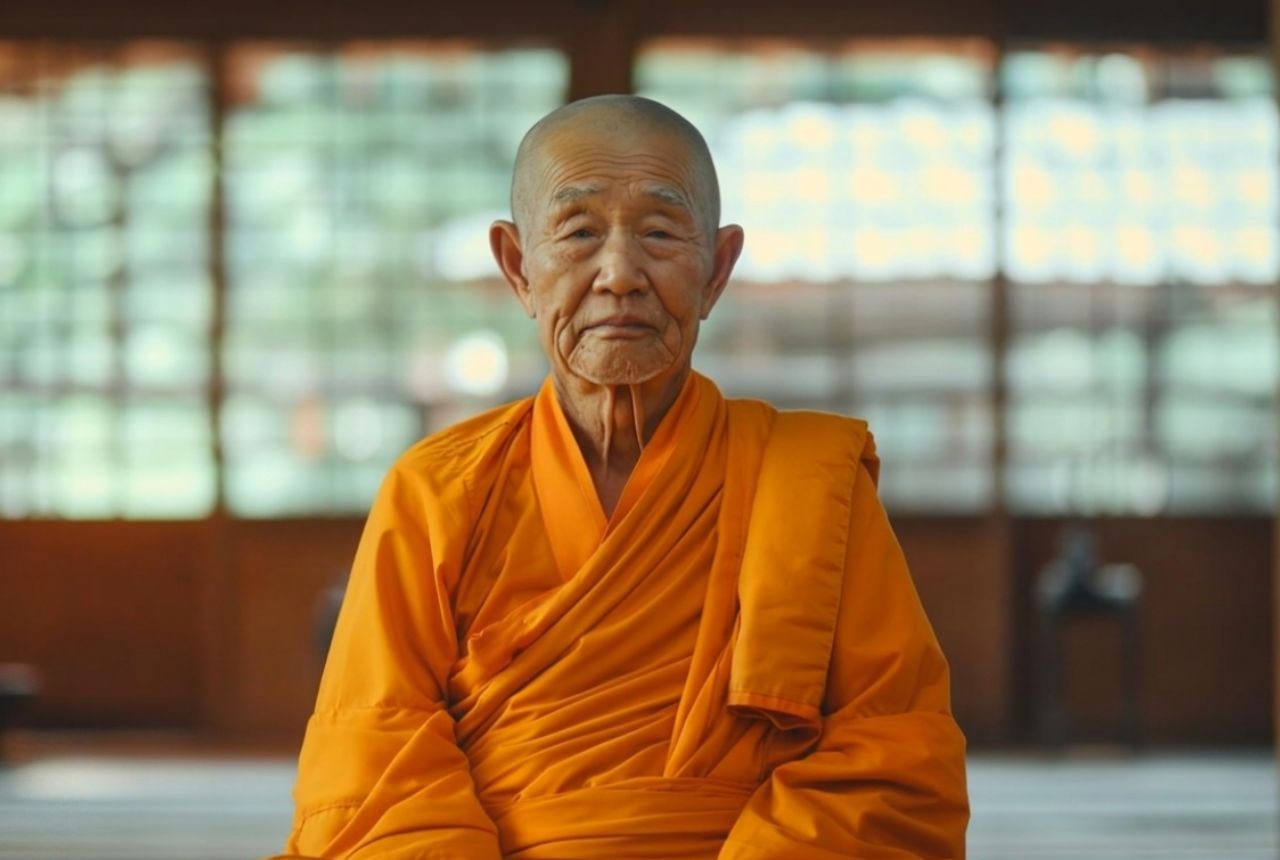
There comes a season in life when the noise begins to fade. The rushing slows down, the endless striving softens, and the world becomes quieter in ways that are both beautiful and unsettling.
You sit in your favorite chair, sunlight stretching across the floor, and suddenly you feel something heavy inside you that has nothing to do with age.
It is not your knees. Not your back. Not even your memory.
It is the weight of everything you have carried for far too long.
Old regrets. Unspoken grief. Expectations that never came true. Relationships that drain your spirit. Fear of getting older. The quiet belief that your best years are already behind you.
Many people assume aging is only about physical decline, but often the hardest part of growing older is emotional. The heart becomes crowded with burdens we never stopped to question. We hold onto pain because it feels familiar. We cling to old identities because we fear emptiness. We carry guilt because we think suffering somehow redeems us.
But what if this chapter of life is not about carrying more?
What if it is about releasing?
The Buddhist teaching, “To let go is to be free,” holds a deep truth that many people only begin to understand later in life. Peace does not always come from gaining something new. Sometimes it comes from finally setting something down.
Here are eight things you may need to let go of as you grow older, wiser, and more at peace with yourself.
1. Let Go of the Belief That There Is Nothing Left to Learn
One of the saddest myths about aging is the idea that growth belongs only to the young.
Somewhere along the way, many people quietly stop being curious. They begin to believe they have already seen everything life has to offer. Learning starts to feel unnecessary, almost embarrassing, as though curiosity has an expiration date.
But the truth is that the human spirit does not stop growing unless we stop allowing it to.
There is a story in Buddhist tradition about an elderly monk who still approached each day like a beginner. Even in his eighties, he bowed before his teacher’s shrine each morning and studied sacred teachings with wonder.
When a younger student asked why he still practiced so humbly after so many decades, the monk smiled and said:
“The beginner sees the world with wonder. The master only understands how little he truly knows.”
That wisdom changes everything.
Growth is not reserved for youth. In many ways, the later years of life are the perfect time for deeper learning because distractions begin to fall away. You no longer learn to impress people. You learn because your soul is hungry for meaning.
A woman once shared that she started learning Mandarin at seventy-six years old. Not because she planned to move abroad or impress anyone, but simply because she was curious.
“I wanted to see if my mind could still stretch,” she said with a smile.
And it could.
Curiosity keeps the spirit alive. A closed mind slowly hardens into stagnation, but an open mind continues blooming no matter your age.
Maybe there is still a book waiting to move you deeply. Maybe there is a skill you never gave yourself permission to try. Maybe there is a truth you avoided because changing your mind felt uncomfortable.
You are never too old to grow.
2. Let Go of Toxic Relationships Without Feeling Guilty
As people grow older, peace becomes more valuable than approval.
You stop craving loud excitement and begin longing for calm. You want relationships that feel safe, nourishing, and gentle rather than exhausting.
Yet many people continue tolerating toxic relationships out of guilt.
Sometimes the difficult people are relatives. Sometimes they are lifelong friends. Sometimes they are people we have spent years trying to “fix” while slowly abandoning ourselves in the process.
Buddhist teachings remind us that love should not require emotional self-destruction.
The Buddha once said:
“Holding onto anger is like grasping a hot coal with the intent of throwing it at someone else. You are the one who gets burned.”
Many people spend decades enduring criticism, manipulation, negativity, or emotional cruelty simply because they feel obligated to.
But protecting your peace is not selfish.
There is a difference between compassion and self-sacrifice.
One elderly woman shared how she attended weekly family dinners for years despite leaving every visit emotionally wounded. Her son constantly criticized her choices and dismissed her feelings. Eventually, she chose not to attend one Sunday.
Instead, she sat quietly on her porch with tea and listened to the evening breeze.
“For the first time in years,” she said later, “I felt like I could breathe.”
That moment changed her life.
You are allowed to step back from relationships that continuously damage your spirit. You are allowed to choose peace over constant emotional tension.
Growing older teaches you that life is too precious to spend it recovering from people who repeatedly drain your light.

3. Let Go of Clutter in Your Home and Your Heart
Clutter is rarely just physical.
Sometimes it is grief sitting quietly in old boxes. Sometimes it is fear disguised as sentimental attachment. Sometimes it is emotional weight hidden inside drawers, closets, and storage rooms.
Many people hold onto objects because they believe letting go means forgetting.
But memories do not live in possessions.
They live within you.
One Buddhist story tells of a woman whose home became overwhelmed with belongings after her husband passed away. She could not bear to throw anything away because she feared losing him all over again.
A monk gently asked her:
YOU MAY LIKE



“How can you receive peace if your hands and heart are already full?”
That question carries tremendous wisdom.
Physical clutter often mirrors emotional clutter. When every room holds unresolved attachment, the mind struggles to feel spacious and calm.
Letting go does not erase love.
It creates room for life to move again.
Many older adults who downsize later describe feeling unexpectedly lighter afterward. Not because they stopped caring about memories, but because they realized their peace mattered too.
A clean and peaceful space affects the spirit deeply. When your environment feels lighter, your thoughts often become lighter as well.
Perhaps it is time to release things you no longer need.
Not because the past did not matter, but because your future matters too.
4. Let Go of the Fear of Aging
Few fears are more deeply rooted than the fear of growing older.
Modern culture constantly tells people that youth equals value. Wrinkles become something to hide. Gray hair becomes something to correct. Slowing down becomes something to apologize for.
But aging is not failure.
It is life unfolding exactly as it was designed to.
The Buddha taught that impermanence is the natural rhythm of existence. Nothing remains unchanged forever, and fighting that truth only creates suffering.
There is something deeply freeing about accepting the reality of aging instead of resisting it.
An elderly Zen teacher once described the body as a lantern.
“The oil may run low,” he said, “but the light still shines.”
That perspective transforms aging from something tragic into something sacred.
With age often comes greater emotional depth. Greater patience. Greater clarity about what truly matters. The endless pressure to prove yourself slowly fades away.
One woman in her late eighties beautifully described her wrinkles as “prayer beads,” each one representing laughter, grief, survival, love, and experience.
What if aging is not something happening against you?
What if it is something unfolding within you?
The later chapters of life often contain a kind of wisdom that youth cannot access. There is beauty in becoming softer, slower, and more reflective.
Aging does not make you less valuable.
It often makes you more fully human.
5. Let Go of Expecting Other People to Make You Happy
One of the quietest heartbreaks in later life comes from unmet expectations.
Many people spend years believing happiness will arrive through someone else. A spouse. A child. A friend. A community.
They wait to feel noticed, appreciated, remembered, or chosen.
But lasting happiness cannot depend entirely on external attention.
The Buddha said:
“No one saves us but ourselves. We ourselves must walk the path.”
That truth may sound harsh at first, but it is actually deeply empowering.
One elderly man shared how lonely he felt after his children moved away and his wife passed on. For a long time, he waited for others to fill the emptiness inside him.

Then one day, he stopped waiting.
He started walking every morning. Joined a watercolor class. Began volunteering at a local library. Slowly, life opened again.
“I realized I was waiting for permission to live,” he admitted.
That realization changed him.
Joy often returns when people stop waiting to be rescued and start actively nurturing their own lives.
Happiness can grow through very small things:
- Sitting outside in the morning sun
- Learning something new
- Creating art
- Gardening
- Reading meaningful books
- Walking in nature
- Volunteering
- Spending peaceful time alone
You deserve a life that feels alive even when nobody else is validating it.
Your joy matters too.
6. Let Go of Comparing Yourself to Younger People
Comparison quietly steals peace.
It often appears unexpectedly through old photographs, younger faces, or memories of who you once were. Suddenly, you begin measuring your current self against your past self.
You remember your energy. Your appearance. Your speed. Your confidence.
And without realizing it, you begin grieving versions of yourself that no longer exist.
But comparison creates suffering because it refuses to honor the wisdom you have gained.
Youth carries beauty, but so does age.
A Buddhist teacher once compared youth to a rushing stream and old age to a still well.
The stream moves quickly and loudly.
The well reflects clearly.
That distinction matters.
With age comes emotional steadiness that younger people often have not yet developed. Life experience creates depth, patience, resilience, and perspective.
You are not supposed to remain who you were decades ago.
You are supposed to evolve.
One older woman admitted she temporarily stopped attending dance recitals because she kept comparing her aging body to younger performers. Eventually, she realized she was turning someone else’s joy into her own sorrow.
So she changed her perspective.
Instead of comparing, she learned to appreciate beauty without making it a judgment against herself.
That is wisdom.
You do not lose value simply because time changes you.
You are becoming someone deeper than you once were.
7. Let Go of Regret and Learn to Forgive Yourself
Regret is one of the heaviest emotional burdens people carry into old age.
Many people replay painful memories in silence for years. Mistakes. Missed opportunities. Relationships damaged by pride or fear. Words left unsaid.
Over time, regret begins shaping identity itself.
People start believing they no longer deserve peace because of what happened long ago.
But self-punishment does not heal the past.
Compassion does.
The Buddha taught that every human being deserves love and understanding, including the version of yourself who made mistakes.
That younger version of you was imperfect, frightened, confused, emotional, and human.
One elderly man shared that he had avoided contacting his brother for more than thirty years because he was ashamed of how he treated him decades earlier.
Eventually, he wrote a letter.
Not to demand forgiveness, but to finally release the guilt consuming him.
He wrote:

“I have carried this long enough. I want to live the rest of my life free.”
That sentence contains extraordinary courage.
Forgiveness is not pretending the past never happened. It is choosing not to poison your present with endless self-condemnation.
You cannot rewrite old chapters.
But you can stop living inside them.
8. Let Go of the Lie That It Is Too Late
Perhaps the most dangerous belief people carry is the idea that life is essentially over after a certain age.
Many people quietly stop dreaming. Stop trying. Stop beginning.
But being alive means possibility still exists.
There are countless stories of people discovering new purpose late in life.
A woman began painting in her nineties and filled her home with color for the first time in years.
An elderly widower started practicing Tai Chi and rediscovered joy in movement.
Another woman created a channel reading bedtime stories to children because she believed her voice still had something meaningful to offer.
These stories matter because they remind us that becoming does not end at retirement or old age.
As long as you are breathing, life is still unfolding.
You are still allowed to begin again.
Maybe your dream is small. Maybe it is quiet. Maybe it is simply learning how to feel alive again.
That is enough.
You do not need to impress the world.
You only need to remain open to possibility.
Conclusion
Growing older is not about shrinking into irrelevance.
It is about becoming lighter, wiser, softer, and more honest with yourself.
EDITORS' RECOMMENDATIONS



Perhaps peace is not found in holding tighter to everything you once were.
Perhaps peace arrives when you finally let go.
Let go of the belief that growth has ended.
Let go of relationships that constantly wound your spirit.
Let go of clutter that weighs down your home and heart.
Let go of fearing the natural process of aging.
Let go of waiting for others to create your happiness.
Let go of comparing yourself to younger versions of yourself.
Let go of regret and offer yourself compassion.
Most importantly, let go of the lie that it is too late.
Because it is not too late.
Not for joy.
Not for healing.
Not for wonder.
Not for peace.
You are not finished becoming.