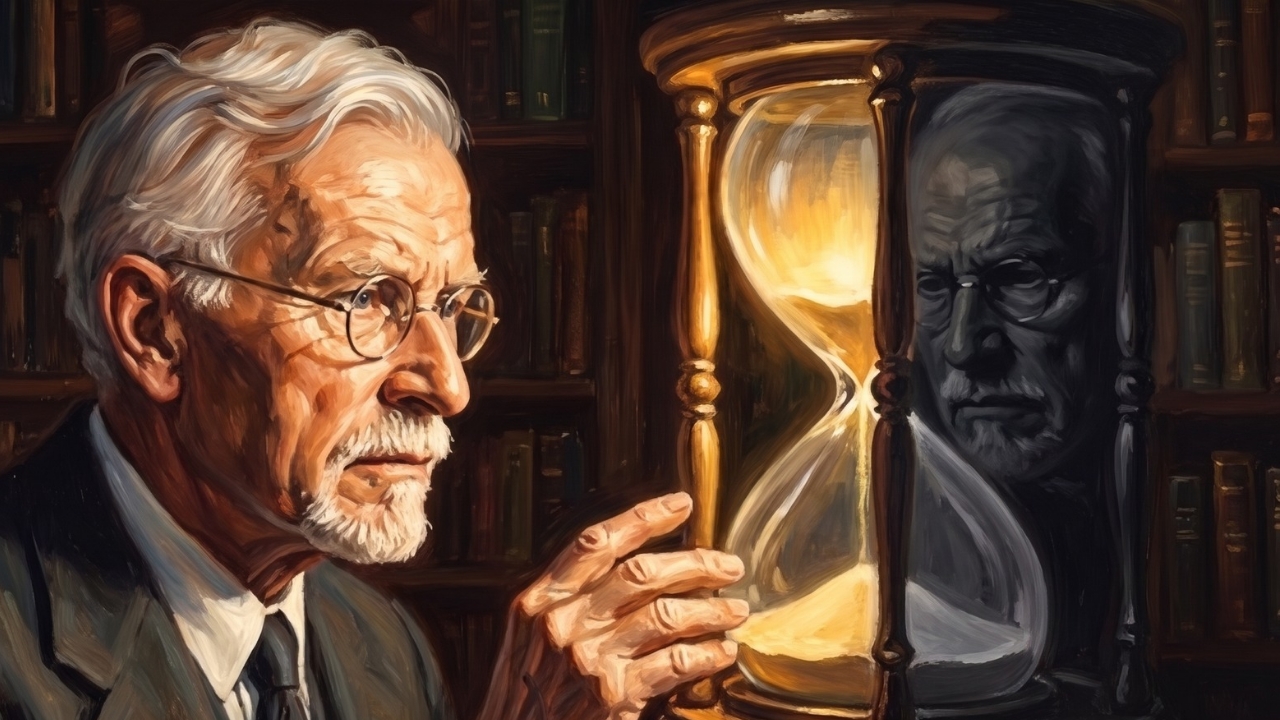
Most people spend the first half of their lives trying to become someone the world will accept. They work hard, build careers, raise families, earn respect, and do everything they believe a responsible adult should do. Yet, somewhere along the way, many reach their 40s and discover something uncomfortable. They have built a life that looks successful from the outside, but deep down, they no longer recognize the person living it.
You might have a stable career, a loving family, a comfortable home, and everything you once dreamed of having. Still, something feels missing. You wake up in the morning, go through your usual routine, fulfill your responsibilities, and wonder why none of it makes you feel truly alive anymore.
According to the psychological ideas of Carl Jung, this feeling may be connected to what he called the unlived life. These are the parts of ourselves we abandon while trying to meet expectations, gain approval, and build a life that makes sense to everyone else.
The uncomfortable truth is that getting older doesn’t automatically make you wiser or more fulfilled. Sometimes, turning 40 is the moment you finally begin to understand how much of yourself you have left behind. And if you are willing to face that truth, your second chapter could become the most meaningful part of your life.
1. The Life You Built May Not Be the Life You Actually Wanted
Mark was 38 years old, and by most people’s standards, he had done everything right. He had a stable income, a respected position at work, a family, and a comfortable home. His life followed the familiar path most people are encouraged to take.
Get good grades, earn a degree, find a decent job, buy a house, start a family, and build a secure future. Mark had checked almost every box, but something strange was happening. The more successful his life became on paper, the less connected he felt to it.
He wasn’t experiencing a major crisis, and there was no obvious reason for him to complain. He simply felt as though he was going through the motions every day, performing the role of a successful man without actually enjoying the life he had created.
This is one of the uncomfortable realities of reaching midlife. You can spend decades doing everything society tells you to do and still discover that the person you have become doesn’t match the person you once wanted to be.
Carl Jung’s ideas about the different stages of life offer an interesting way to understand this experience. The first half of life is largely concerned with building an identity, finding your place in the world, establishing security, and meeting responsibilities.
But as you enter the second half, the things that once motivated you may no longer feel satisfying. Ambition, approval, perfectionism, and the need to please everyone can gradually become limitations rather than strengths.
You might have spent years climbing the career ladder, only to reach a point where you start questioning whether it was even the right ladder. You worked hard to arrive somewhere, but never stopped to ask whether it was somewhere you genuinely wanted to be.
The problem isn’t necessarily that your life is terrible. The problem is that you may have spent so much time becoming the person everyone expected that you forgot to become yourself.
2. The Person in the Mirror May Be a Stranger
There comes a moment when you look at yourself and realize something doesn’t feel right. It might happen while brushing your teeth, getting dressed for work, or simply catching your reflection in a window.
For Mark, it happened one morning at 6:42 a.m. He was standing in front of his bathroom mirror when he suddenly noticed something he had ignored for years. He didn’t look particularly old or unhappy, but there was a strange distance in his eyes.
He couldn’t find the excitement, curiosity, or confidence he remembered having when he was younger. Instead, he saw someone who seemed to be moving through life without being fully present.
As he continued looking at himself, memories started coming back. He remembered the young man who wanted to write, the adventurer who enjoyed trying new things, and the person who once believed that almost anything was possible.
Those parts of him hadn’t disappeared because he had grown older. They had been pushed aside, one decision at a time, in exchange for stability, acceptance, and the approval of other people.
This connects with Jung’s concept of the shadow. In his psychological framework, the shadow represents aspects of ourselves that we reject, suppress, or fail to acknowledge because they don’t fit the identity we have created.
For example, you might suppress your creative side because your family expects you to pursue a more practical career. You might hide your desire for adventure because people depend on you to remain predictable and responsible.

You may even silence your opinions because you don’t want to upset anyone or create unnecessary conflict. Over time, these small compromises can create a growing distance between who you really are and the person you present to the world.
The difficult part is that you can become so accustomed to this version of yourself that you stop questioning it. You become dependable, respected, and successful, but privately feel disconnected from the person you see in the mirror.
YOU MAY LIKE



Sometimes, the most important question you can ask yourself at 40 isn’t whether you have achieved enough. It’s whether you still recognize the person you have become.
3. The Unlived Life Will Keep Knocking Until You Listen
The parts of yourself you abandon don’t necessarily disappear. They often remain in the background, waiting for an opportunity to remind you that something important has been neglected.
For some people, that reminder comes as unexplained restlessness. For others, it appears as boredom, frustration, or a growing sense that their everyday routine no longer gives them anything to look forward to.
Mark started noticing these feelings in ordinary situations. One afternoon, while watching his son play soccer, he found himself wondering what had happened to the dreams he once had for his own life.
Another time, he walked past a bookstore and remembered how much he used to enjoy writing. He had once imagined creating something meaningful that would outlive him, but somewhere along the way, that dream had been pushed aside.
Even at work, he began noticing how disconnected he felt. He would sit through meetings, smile at the right moments, and perform his responsibilities while a quiet voice inside him kept asking whether this was really all he wanted.
That’s how the unlived life often makes itself known. It doesn’t necessarily arrive as a dramatic breakdown or a sudden desire to abandon everything you have built.
Instead, it appears through small moments of discomfort that become increasingly difficult to ignore. You start questioning your choices, remembering forgotten interests, and wondering what happened to the person you used to be.
The danger comes when you keep distracting yourself instead of paying attention. You might spend hours scrolling through your phone, filling every free moment with entertainment, or finding more work to keep your mind occupied.
But distractions don’t resolve the feeling. They only give you temporary relief from questions you already know you need to answer.
Mark eventually decided to respond to that inner voice in a very simple way. One morning, he sat down with a blank page and started writing again for the first time in more than 15 years.
He didn’t do it because he wanted to publish a book or turn writing into a new career. He simply wanted to reconnect with something he had once loved, and that small decision became the beginning of something important.
The lesson is that you don’t have to make a dramatic life change to start listening to yourself. Sometimes, answering the knock means giving an old passion a little space in your everyday life.
4. You Don’t Need to Destroy Your Old Life to Rediscover Yourself
One of the biggest mistakes people make when they begin questioning their lives is assuming that everything needs to change immediately. They imagine quitting their jobs, moving somewhere new, ending relationships, or completely reinventing themselves.
But rediscovering yourself doesn’t always require dramatic decisions. Sometimes, the life you have built can remain intact while you gradually make room for the parts of yourself you have neglected.
Consider another man who had spent 18 years working in software sales. He was successful, earned a good income, and had built a comfortable life, but he felt emotionally disconnected from almost everything.

At 45, he decided to start swimming again, something he had enjoyed during his college years. What began as a simple way to reconnect with an old interest eventually led him to coach children part-time.
Within a year, he was smiling more, becoming less irritable, and feeling genuinely excited about something again. When asked what had changed, his answer was simple: he didn’t need a new life. He needed to remember the man he was before he forgot.
This is an important distinction. Sometimes, you don’t need to become someone completely different because the person you are searching for has been part of you all along.
You might need to start painting again, return to playing an instrument, spend more time outdoors, or reconnect with friends who knew you before your career became your entire identity. These activities may seem small, but they can help restore a sense of connection with yourself.
You can also start creating boundaries around the things that constantly drain your energy. Stop agreeing to every request, take walks without your phone, and make time for activities that don’t have to produce money or improve your professional status.
Most importantly, spend time with people who value you for who you are rather than what you provide. You deserve relationships where you can laugh, speak honestly, and exist without constantly trying to impress anyone.
The goal isn’t to escape your responsibilities. It’s to stop using those responsibilities as an excuse to abandon yourself.
5. Life Really Begins at 40 When You Stop Living for Other People’s Approval
One of the most important ideas associated with Jung’s view of midlife is that the second half of life calls for a different kind of growth. The goals that dominated your younger years may no longer provide the meaning you need as you get older.
When you were younger, you may have been focused on proving yourself. You wanted to establish a career, earn respect, gain financial security, and show people that you were capable of building a successful life.
Those goals may have been necessary at the time, but they don’t have to define the rest of your existence. At some point, you need to start asking different questions.
Instead of constantly asking what you should do with your life, begin asking what makes you feel alive. Instead of measuring your worth through achievements, consider whether your daily choices reflect the person you genuinely want to be.
This shift can feel uncomfortable because it requires you to question beliefs you may have followed for decades. You might discover that some of your goals were never truly yours, but were inherited from your family, society, or the expectations of people around you.
You may also have to accept that certain decisions were made out of fear rather than genuine desire. Perhaps you chose security because you were afraid to fail, stayed silent because you feared rejection, or abandoned a passion because someone told you it wasn’t practical.
Recognizing these things doesn’t mean you should spend the rest of your life regretting your choices. It means you finally have an opportunity to understand them and decide what you want to do differently.
You don’t need permission to explore a forgotten interest or pursue something meaningful. You don’t have to wait until your children grow up, your finances become perfect, or everyone around you agrees with your decisions.
The second half of life is an opportunity to stop chasing other people’s definitions of success and begin creating a life that feels authentic to you.
6. Your Second Chapter Begins When You Give Yourself Permission to Start Again
Starting again at 40, 50, or even 60 can feel intimidating. You might worry that you’re too old to learn something new, that you have wasted too much time, or that people will think you’re being unrealistic.
But those fears shouldn’t automatically decide what the rest of your life looks like. Being a beginner again isn’t a sign that you have failed. It can be a sign that you’re finally willing to explore something beyond the identity you’ve spent years maintaining.

Mark discovered this through his writing. He started with 15 minutes a day, without worrying about whether his work was good enough or whether anyone would ever read it.
He also began taking walks without constantly checking his phone. He reconnected with old friends, became more intentional about his boundaries, and started saying no to things that left him emotionally exhausted.
Gradually, the fog that had surrounded his life began to lift. His responsibilities hadn’t disappeared, and his circumstances hadn’t suddenly become perfect, but he felt lighter because he was no longer carrying the burden of pretending to be someone he wasn’t.
This is what the transcript describes as the second flame. It isn’t about burning down everything you have built or abandoning the people who depend on you.
It’s about allowing yourself to feel excited, curious, creative, and hopeful again. It’s about doing things because they bring meaning to your life, not because they make you look successful in someone else’s eyes.
You might feel foolish when you start something new. You might struggle, make mistakes, and discover that you’re not immediately good at the things you once enjoyed.
That’s perfectly fine. You don’t need to be impressive at everything you do, especially when you’re rediscovering parts of yourself that have been neglected for years.
The important thing is to give those parts of yourself room to breathe. You don’t have to wait for the perfect moment because the perfect moment may never arrive.
Your second chapter doesn’t need to look like anyone else’s. It only needs to reflect the person you want to become.
EDITORS' RECOMMENDATIONS



Don’t Go to Your Grave With the Song Still Inside You
Many people spend their entire lives trying to become someone impressive while forgetting to become someone they genuinely recognize. They build careers, collect achievements, maintain appearances, and carry responsibilities until they eventually realize that something important has been missing.
Mark’s story reminds us that the answer isn’t always to start over. Sometimes, the most meaningful change happens when you stop pretending, listen to yourself, and begin reconnecting with the person you left behind.
You don’t have to abandon your family, quit your job, or destroy the life you’ve worked so hard to build. You simply need to make room for the interests, dreams, passions, and experiences that make you feel alive.
If you’re approaching 40 or already well beyond it, don’t assume your most meaningful years are behind you. You are not too late, you are not stuck, and you don’t have to spend the rest of your life performing an identity that no longer fits.
The real question is whether you’re willing to listen to that quiet voice inside you. The voice that remembers what you loved, what you wanted, and who you were before the world convinced you to become someone else.
You may not be able to change the years you’ve already lived, but you can decide how you spend the years ahead. Don’t wait until everything is perfect, and don’t go to your grave with the song still inside you.
Let yourself create. Let yourself dream. Let yourself live. Your second chapter is waiting, and it can begin right now.