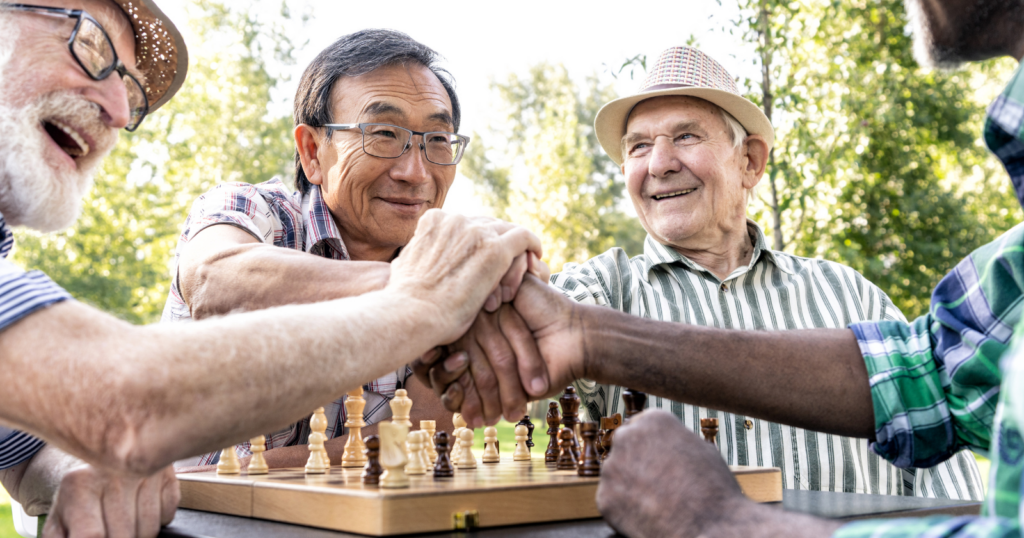
Something surprising happens after 65. The retirees who build rich, meaningful friendships don’t suddenly transform into extroverts. They simply place themselves in environments that make connection feel natural instead of forced.
I’ve watched this play out with older relatives and neighbors. The ones who thrive socially don’t chase popularity. They show up in the right places, and friendships grow almost effortlessly. Psychology confirms this pattern: shared purpose beats personality every time.
If you want to understand how retirees make new friends after 65, you need to look at the environments that encourage real connection. These six places work because they remove pressure, create shared meaning, and allow authentic relationships to grow at their own pace.
Let’s talk about them like friends would.
1) Volunteer organizations where you teach what you know
Volunteer spaces create one of the easiest paths to authentic connection after retirement. These environments give retirees something powerful: a sense of usefulness and shared purpose.
When someone teaches skills they already know, they stop worrying about impressing people. They focus on helping. That shift removes social anxiety immediately. Psychology shows that purpose-driven interaction lowers self-consciousness and increases bonding naturally.
I saw this with a retired mechanic in my neighborhood. He started helping young apprentices at a local workshop. He didn’t try to make friends. He simply shared his knowledge. Within months, he built genuine friendships because people respected and appreciated him.
Volunteer environments work so well because they create natural conversation starters. People talk about real tasks instead of awkward small talk.
Here’s why volunteer teaching environments help retirees connect faster:
- They give retirees a meaningful role immediately
- They attract people who value learning and growth
- They create repeated interaction over time
- They build respect before friendship
Organizations like AARP actively encourage volunteering because research shows it improves both emotional health and social satisfaction.
IMO, this works because helping others removes social pressure completely. People connect faster when they stop trying to “be liked” and focus on being useful.
2) Learning environments where everyone’s a beginner
Nothing levels the social playing field faster than learning something new together. When everyone starts as a beginner, nobody feels behind, intimidated, or judged.
Psychology explains this clearly. Shared vulnerability accelerates trust. When retirees join a painting class, language course, or music lesson, they share mistakes, laughs, and progress together.
I remember joining a beginner photography class once. Nobody cared about status or background. We all struggled equally. That shared struggle made conversations easy and genuine.
Learning environments remove comparison. They replace it with collaboration.
These environments work so well because they create equal footing:
- Everyone starts at the same level
- Everyone improves together
- Everyone shares challenges and wins
- Everyone has something to talk about naturally
Research from Harvard University shows that shared learning experiences strengthen social bonds faster than casual social gatherings.

Retirees benefit even more because learning gives them both mental stimulation and social interaction. They don’t just gain skills. They gain community.
FYI, this works especially well for people who never saw themselves as “social.” The activity carries the conversation.
3) Book clubs and discussion groups
Book clubs create some of the deepest and most meaningful friendships retirees experience. These groups encourage real conversation, not surface-level chat.
Books give people safe ways to share personal thoughts. Someone might discuss a character’s struggle, but they also reveal their own perspective indirectly. That honesty builds emotional connection quickly.
I’ve noticed that book discussions often turn into life discussions. People share memories, opinions, and experiences naturally.
Book clubs help retirees connect because they offer structure and emotional depth:
- Books provide endless conversation topics
- People reveal values through discussion
- Meetings happen regularly
- Members develop familiarity and trust over time
Groups inspired by communities like Oprah’s Book Club demonstrate how powerful shared reading can be for connection.
Psychology explains this effect clearly. People bond faster when they exchange ideas instead of surface facts.
Discussion groups also give introverts an advantage. They don’t need to initiate random conversation. The book provides a natural starting point.
These environments reward curiosity, not charisma. That makes them perfect for retirees who want authentic friendships.
4) Regular walking groups or gentle exercise classes
Movement brings people together in surprisingly powerful ways. Walking groups and gentle exercise classes create relaxed, low-pressure environments where conversation flows easily.
Walking removes the intensity of face-to-face interaction. People walk side by side, which makes conversation feel safer and more natural.
I’ve personally experienced this effect. Conversations during walks feel easier and more honest. Nobody feels trapped or pressured.
Exercise groups help retirees build connection through consistency:
- They meet regularly
- They encourage routine interaction
- They improve mood naturally
- They create shared goals
Organizations like YMCA offer senior-friendly exercise programs specifically because they improve both physical and social well-being.

Psychology shows that physical movement reduces stress hormones and increases openness to connection.
Walking groups also remove performance pressure. Nobody expects perfect conversation. People simply walk, talk, and connect gradually.
This slow, steady interaction builds trust naturally. Retirees don’t force friendships. They allow friendships to develop over time.
5) Community gardens and shared project spaces
Community gardens create one of the most powerful environments for authentic connection after retirement. These spaces combine purpose, routine, and teamwork.
People work toward visible results together. They plant seeds, care for growth, and celebrate progress. That shared investment strengthens emotional bonds.
I love how gardening creates natural conversation. People discuss plants, weather, and techniques. These simple topics open the door to deeper conversations over time.
Shared project spaces help retirees connect because they provide:
- Ongoing shared responsibility
- Visible progress and achievement
- Frequent interaction opportunities
- A calm, peaceful environment
Community projects shift focus away from social performance. People focus on the task instead of worrying about how they appear.
Psychology explains this clearly. Shared goals increase trust faster than shared entertainment.
Project spaces also create identity. People feel like they belong to something meaningful.
Retirees don’t just make friends. They become part of a team.
6) Faith or philosophy groups that welcome questions
Faith and philosophy groups create deep, meaningful connections because they encourage honest reflection and discussion.
These groups focus on life’s biggest questions. People discuss purpose, meaning, values, and personal experiences. That depth creates powerful emotional bonds.
The key factor here involves openness. Groups that welcome questions create psychological safety. People feel free to express thoughts without judgment.
I’ve seen retirees find incredible friendships in these environments. They don’t connect through hobbies alone. They connect through shared understanding.
These groups encourage connection because they offer:
- Regular gatherings
- Meaningful conversation topics
- Shared values and reflection
- Emotional support systems
Psychology shows that shared belief systems strengthen trust and belonging quickly.
Faith and philosophy groups also create stability. Members see each other regularly, which allows relationships to grow naturally.
These environments prioritize authenticity over performance. That makes them ideal for retirees who want real friendships.
Why these places work better than random social events
Most people assume outgoing personalities make friendships easier. Psychology shows something different. Environment matters more than personality.
These six places share key psychological advantages:
- They create repeated interaction
- They provide shared purpose
- They reduce social pressure
- They encourage authentic conversation
Platforms like Meetup exist because people crave structured environments that support connection.
Random social events often fail because they lack structure. People don’t know what to say or how to connect.
Structured environments solve that problem completely.
Authentic friendship after 65 comes from placement, not personality
Psychology says the retirees who make new friends after 65 aren’t more outgoing—they’ve simply figured out where authentic connection actually happens.
They don’t rely on charm or luck. They rely on shared purpose, shared learning, and shared experience.
They show up in places where conversation feels natural. They allow relationships to grow slowly and authentically.
If you remember one thing, remember this: friendship grows fastest when people focus on doing meaningful things together—not trying to impress each other.
And honestly, that truth applies at any age.