Getting older does not mean you have to give up looking stylish, polished, or modern. In fact, the right clothes can make you feel more confident, while a few outdated choices can quietly make you look older than you actually are.
The problem is usually not that your clothes are unfashionable. It is often that you are dressing for the body, proportions, or version of yourself that existed years ago. The good news is that these mistakes are easy to fix, and you do not need to replace your entire wardrobe to do it.
1. Wearing Clothes That Do Not Fit Your Body Now
This may be the biggest fashion mistake women over 50 can make. Wearing clothes that do not fit your current body can instantly make an outfit look less flattering, even when the individual pieces are beautiful.
That means you should stop dressing for the body you had at 40 or the body you hope to have someday. The body you have today deserves clothes that fit it properly and make you feel comfortable.
Clothes that are too large do not necessarily hide areas you want to minimize. Instead, oversized pieces can erase your natural shape, add unnecessary bulk, and make your entire silhouette look shapeless.
On the other hand, clothing that is too tight creates a completely different problem. When fabric pulls or puckers around your stomach, hips, or upper arms, it draws attention directly to the areas you may be trying to downplay.
This is where tailoring can make a huge difference. Getting a favorite pair of pants hemmed or having a blazer taken in can completely change how the garment looks on you.
You do not need your clothes to cling to your body, and you do not want them hanging from it either. The goal is for your clothing to skim your body in a way that creates a clean and flattering silhouette.
2. Ignoring What Your Neckline Is Doing
Your face is naturally one of the first things people notice, so the neckline of your top plays an important role in how your entire outfit looks. Yet many women choose necklines based simply on what happens to be available in the store.
A neckline that opens up the area around your face can help draw the eye upward. V-necks, scoop necks, open collars, boat necks, and square necklines can all create more space around the face.
When every top in your wardrobe has a high, closed neckline, you lose some of that visual lift. The outfit can end up looking heavier around your face and upper body.
There is a very simple test you can use the next time you put on a top. Look at yourself and ask whether the neckline is drawing attention toward your face.
If it is, you are probably on the right track. If it is not, try another neckline and see how different the entire outfit feels.
You do not even need to replace your wardrobe to make this change. Something as simple as leaving the top button open on a classic button-down shirt can create a more flattering neckline.
3. Choosing Hemlines That Hit at the Wrong Spot
Hemlines can have a surprisingly powerful effect on your overall silhouette. A skirt or dress can look completely different depending on exactly where the hem ends on your legs.

One particularly tricky length is the mid-calf hemline that was popular during the late 1990s and early 2000s. When it ends at the widest part of the calf, it can visually shorten your legs and make your frame appear heavier.
The goal is to avoid that awkward area where the hem seems to cut your legs in half. Instead, look for lengths that create a longer and more balanced silhouette.
YOU MAY LIKE



A hem that sits at or just below the knee can be flattering on many women. A true midi that flows past the widest part of your calf can also work beautifully, especially when the fabric has some movement.
Maxi skirts and dresses can be another elegant option. When paired with a heel or wedge, a flowing maxi can create a long, graceful line.
The next time you try on a skirt or dress, do not only stare at yourself from the waist up. Step back and look at your entire silhouette to see exactly where the hem is cutting across your legs.
4. Wearing the Wrong Foundation Garments
You may not see your bra or shapewear when you get dressed, but you can definitely see the effect they have on your clothes. The wrong foundation garments can completely change the way an outfit sits on your body.
Your bra is especially important because your body can change considerably over time. A bra that fitted perfectly when you were 40 may no longer provide the same support or create the same shape after 50.
The same applies to shapewear. Wearing shapewear that is too small can create unwanted bulges, rolls around the waist, and visible compression lines underneath your clothing.
The solution is not necessarily more compression. In many cases, choosing the correct size or even sizing up can create much smoother lines beneath your clothes.
A professional bra fitting can also be incredibly helpful. Since your body can change over time, it is worth checking your size regularly rather than assuming the same bra size will work forever.
It is also important to pay attention to how frequently you wear your bras. Everyday bras may need replacing more often than pieces that only come out of the drawer for special occasions.
The goal of foundation garments is to create a smooth base for your clothes. They should support your outfit rather than create new problems underneath it.
5. Overmatching Everything
There is nothing inherently wrong with matching your accessories. The problem begins when absolutely everything matches perfectly from head to toe.
Think about the classic combination of a handbag matching the shoes, the shoes matching the belt, and everything matching the rest of the outfit. This was once considered the definition of polished dressing, but it can now make an outfit feel overly coordinated.
Modern dressing is more about coordination than perfect matching. Your clothes and accessories should work together without looking as though they were purchased as one complete costume.

Tonal dressing is a great way to achieve this. You can wear different shades from the same color family and create an outfit that looks sophisticated without being overly predictable.
You can also mix metals or pair a beautiful handbag with shoes in a contrasting neutral. These small differences can make an outfit look more current and effortless.
Another simple trick is to let one accessory stand out. A bold handbag with neutral shoes or an interesting pair of shoes with a simple outfit can look intentional without becoming overwhelming.
Perfectly matching every single item can sometimes make an outfit look more like a costume than personal style. A little contrast gives your wardrobe more personality.
6. Avoiding Color, Prints, and Patterns
After 50, it can be tempting to rely heavily on neutrals. Black, white, gray, and camel are easy to combine, incredibly versatile, and perfect for building a classic wardrobe.
There is nothing wrong with having plenty of neutrals in your closet. The problem comes when your entire wardrobe becomes so neutral that it starts to look severe or stark against your complexion.
Your skin naturally changes as you age, which means certain colors can make a surprisingly noticeable difference. Adding color near your face can bring warmth and interest back into an otherwise neutral outfit.
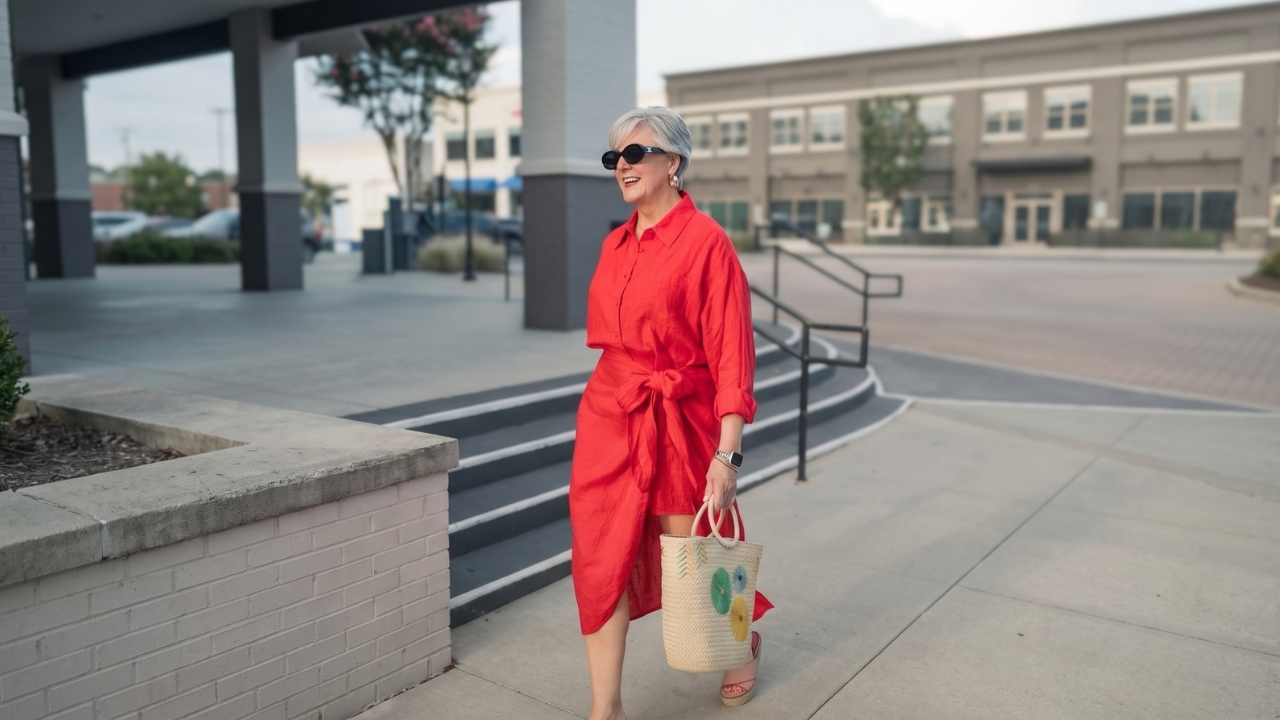
You do not need to suddenly start wearing bright colors from head to toe. A colorful blouse, silk scarf, or statement earring can be enough to change the entire feel of an outfit.
Soft and sophisticated shades such as dusty rose, warm coral, sage green, and periwinkle can be particularly beautiful choices. The important thing is finding colors that make you feel good and complement your complexion.
Prints and patterns should not automatically be pushed aside either. You do not have to wear a bold print everywhere if that is not your style, but completely avoiding patterns can make your wardrobe feel unnecessarily limited.
If you are hesitant about color, start small. Choose one colorful piece near your face and build the rest of the outfit around your neutral wardrobe.
7. Clinging to a Decade-Old Silhouette
Most of us have a particular period in our lives when we felt especially confident about our appearance. Sometimes, without realizing it, our personal style gets stuck in that period and never really moves forward.
Maybe you still love the bootcut jeans that were everywhere in the early 2000s. Perhaps you have held onto the oversized blazer shapes that were popular in the 1990s.
There is absolutely nothing wrong with loving those styles. The problem is wearing the exact same silhouette year after year without making any updates.

You do not need to abandon everything you love just because fashion has changed. Instead, refresh your favorite silhouettes so they feel intentional rather than frozen in another decade.
For example, you might try a wide-leg trouser in a current fabric and length. A structured blazer with updated proportions can also give you the familiar feeling of a classic piece while making the outfit look more current.
The trick is to update at least one element of a silhouette you already love. That small change can make a familiar outfit feel fresh without forcing you to completely reinvent your personal style.
Pick one favorite silhouette from your wardrobe and look for a more current version of it. You may be surprised by how little it takes to make your usual style feel new again.
You Do Not Need a Whole New Wardrobe
The best part about these seven fashion mistakes is that they are all fixable. You do not need to walk into a store and spend a fortune replacing everything in your closet.
Start by looking at the clothes you already own with fresh eyes. Check the fit, experiment with your necklines, reconsider your hemlines, and make sure your foundation garments are actually helping your clothes look better.
EDITORS' RECOMMENDATIONS



Then look for small ways to modernize your favorite outfits. Add a little color, introduce some contrast, update an old silhouette, or let one accessory become the star of the outfit.
Most importantly, stop assuming that the styles that worked years ago have to remain exactly the same forever. Your personal style can evolve while still reflecting who you are.
Conclusion
Getting older does not mean your style has an expiration date. The real problem is not being over 50, but continuing to dress for a version of yourself that no longer exists.
You do not need a shopping spree to look more modern and polished. You need a fresh eye, clothes that fit the body you have today, and the willingness to let go of what used to work.
Style is not about trying to look like someone half your age. It is about wearing clothes that make you feel confident, comfortable, and completely yourself.
Your wardrobe can change as you change. Style has no expiration date, and neither do you.