We live in a world that constantly tells us to work harder, hustle more, and push ourselves beyond our limits if we want to succeed. Everywhere we look, people make it seem as though exhaustion is proof of ambition and that getting everything we want requires a constant struggle.
But what if we have been approaching success the wrong way all along? What if the secret to building the life we want isn’t about forcing everything to happen, but about changing the way we think, act, and respond to life?
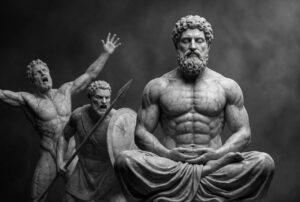
The ancient Stoics understood something that many people today have forgotten. They believed that true power comes from mastering yourself, accepting what you cannot control, and learning to move through life without constantly fighting against it.
Marcus Aurelius, the Roman emperor and Stoic philosopher, managed millions of people and led massive armies, yet he understood the importance of staying grounded in the present. He wrote, “Confine yourself to the present,” reminding himself that worrying about things beyond his control only wasted the energy he needed for the things that mattered.
Think about holding a handful of sand. The tighter you squeeze, the faster it slips through your fingers, but when you relax your grip, it stays in your palm. Life often works the same way, especially when it comes to success, relationships, happiness, and personal growth.
Stoicism teaches us that we don’t need to chase everything desperately. Instead, we need to become people who can recognize opportunities, handle challenges, control our emotions, and remain peaceful regardless of what happens around us.
Here are 10 powerful Stoic rules that can help you stop chasing everything, develop inner strength, and create the kind of life you genuinely want.
1. Practice Preferred Indifference and Stop Desperately Chasing What You Want
There is something strange about human nature. The more desperately we need something, the more difficult it becomes to approach it with confidence and a clear mind.
Think about how you behave when you desperately want someone to like you. You become overly concerned about what they think, carefully choose your words, and sometimes pretend to be someone you aren’t just to win their approval.
Unfortunately, that desperation often pushes people away because it makes you appear insecure and dependent on their acceptance. The same thing happens when you approach money, success, relationships, and other personal goals with the belief that you cannot be happy without them.
The Stoics practiced a principle called preferred indifference. Epictetus, who was born into slavery but eventually became one of history’s most respected philosophers, taught that wealth comes from having few wants rather than owning many possessions.
This doesn’t mean you should stop wanting a better home, a successful career, a loving relationship, or financial freedom. It simply means you shouldn’t allow your happiness to depend entirely on getting those things.
You can want something without desperately needing it. You can work toward success while remaining perfectly comfortable with yourself, even before that success arrives.
Imagine attending a social gathering where you don’t know many people. If you spend the entire evening worrying about whether everyone likes you, you’ll probably struggle to relax and enjoy yourself.
But when you enter with the mindset that you would appreciate making new friends but don’t need everyone’s approval, something changes. You become more confident, more relaxed, and more comfortable expressing your real personality.
Apply that same mindset to your goals. Work hard for what you want, but don’t allow the absence of those things to convince you that your life is incomplete.
When you stop desperately chasing external validation, you develop the confidence to make better decisions and recognize opportunities without allowing fear to control you.
2. Become an Anchor in the Present Moment
Most people spend far too much time living in two places they cannot change or control: the past and the future. They either spend their days regretting yesterday’s mistakes or worrying about everything that could go wrong tomorrow.
The problem is that while their minds are occupied with things they cannot change, they often overlook the opportunities sitting right in front of them.
The Stoics understood that the present moment is where our real power exists. You cannot go back and rewrite yesterday, and you cannot control everything that will happen tomorrow, but you can decide what you do with today.
Seneca, the Roman Stoic philosopher, emphasized the importance of enjoying the present without becoming anxious about the future. He understood that constantly worrying about what might happen prevents people from appreciating the life they already have.
Think about your mind as a magnifying glass. When you keep moving it across different spots, it cannot concentrate enough sunlight to start a fire, but when you hold it steady in one place, it creates enough heat to make something happen.
Your attention works in much the same way. When you constantly divide it between yesterday’s disappointments, tomorrow’s worries, and today’s responsibilities, you struggle to give anything your full attention.
Being present can change the way you approach almost every part of your life. When you focus completely on your work, you produce better results, and when you give your loved ones your full attention, you build stronger relationships.
You also begin to appreciate the little things that make everyday life meaningful. Something as simple as enjoying your morning coffee, taking a walk, or having a conversation with someone you love becomes more valuable when you are actually present.
Stop treating your current life like a waiting room for something better. Your real life is happening right now, and learning to appreciate it is one of the most important steps toward finding lasting happiness.
3. Turn Every Obstacle Into Fuel for Your Growth
One of the biggest mistakes people make is believing that a successful life should be free from problems. They imagine that once they find the right job, relationship, or financial situation, everything will finally become easy.
Unfortunately, life doesn’t work that way. Even when things are going well, unexpected challenges will eventually appear.
You might lose a job, experience a painful breakup, watch a business idea fail, or face a situation that completely changes your plans. When these things happen, it’s easy to become frustrated and believe that life is working against you.

The Stoics had a completely different way of looking at difficulties. Marcus Aurelius expressed this idea through his famous teaching, “The impediment to action advances action. What stands in the way becomes the way.”
In other words, the things standing between you and your goals can also become the experiences that prepare you to achieve them.
Think about a fire burning in the open air. A small candle might go out when a strong wind blows against it, but a large bonfire can become even stronger when the wind feeds its flames.
You must develop that same kind of strength. Instead of allowing every setback to destroy your confidence, learn to use difficult experiences as opportunities to build patience, discipline, and resilience.
When someone rejects your idea, you can use that experience to improve it. When you lose an opportunity, you can examine what went wrong and prepare yourself for the next one.
YOU MAY LIKE



This doesn’t mean pretending that painful experiences don’t hurt. It means refusing to let temporary circumstances determine the rest of your life.
The next time something goes wrong, stop asking why everything is happening to you. Instead, ask yourself what you can learn from the situation and how you can use it to become stronger.
Once you develop this mindset, obstacles stop looking like permanent barriers. They become part of the training that prepares you for the person you want to become.
4. Reclaim Your Inner Authority and Stop Giving Your Power Away
Think about how many times you allow other people or external situations to control your mood. Someone cuts you off in traffic, a coworker ignores your effort, or a stranger makes an unpleasant comment, and suddenly your entire day feels ruined.
You might spend hours thinking about something that happened in just a few seconds. Meanwhile, the person who upset you has probably moved on without giving the situation another thought.
The Stoics believed that one of the greatest forms of freedom comes from understanding what you can and cannot control. Epictetus taught that although we cannot always control what happens to us, we have considerable control over how we respond to those events.
This is an important distinction because many people unknowingly hand their happiness over to things they cannot control. They allow their bank balance, other people’s opinions, social media comments, and unexpected disappointments to determine how they feel about themselves.
When your happiness depends entirely on external circumstances, you become emotionally dependent on the world behaving exactly as you want. Unfortunately, the world rarely follows our personal instructions.
Reclaiming your inner authority means accepting responsibility for your reactions. You may not be able to stop someone from disrespecting you, but you can decide whether their behavior deserves to occupy your mind for the rest of the day.
You can experience disappointment without allowing it to destroy your confidence. You can face uncertainty without immediately assuming the worst, and you can disagree with someone without turning the situation into an emotional battle.
This kind of self-mastery also helps you focus your energy on things that actually matter. Instead of wasting your attention reacting to every little inconvenience, you have more mental space for your goals, relationships, and personal growth.
Remember that you cannot control every event in your life, but you can work on becoming someone who responds to those events with wisdom rather than constant frustration.
5. Practice Strategic Stillness Instead of Constantly Forcing Things
Modern society has made people believe that being busy is the same as being productive. We often feel guilty when we aren’t working, checking something, making plans, or trying to move closer to another goal.
But there is a big difference between constant movement and meaningful progress. A rocking chair moves all day without actually getting anywhere.
The Stoics understood that knowing when to act is just as important as knowing when to wait. Strategic stillness means recognizing that some situations require patience rather than another desperate attempt to force an outcome.
Imagine planting a seed in your garden. You water it, give it sunlight, and provide the conditions it needs to grow, but you don’t dig it up every five minutes to check whether the roots are developing.
Doing that would only interfere with the natural process. Sometimes, you need to give things the time and space they require to develop.
The same principle applies to your goals. You can work hard on a business, relationship, or personal project without constantly checking for immediate results or making unnecessary changes out of frustration.
Many people take frantic action because they are afraid that nothing will happen if they stop pushing. Unfortunately, decisions made from anxiety often create more problems than they solve.
Learning to become still gives you the opportunity to think clearly and recognize what needs to happen next. Instead of reacting to every situation, you begin taking deliberate actions that serve a clear purpose.
This doesn’t mean becoming lazy or abandoning your responsibilities. It means understanding that progress sometimes requires patience, observation, and the discipline to wait for the right moment.
When you stop confusing busyness with achievement, you begin using your time and energy much more wisely.
6. Use Gratitude to Develop a Mindset of Abundance
Most people practice gratitude only after something good happens. They become thankful when they receive money, achieve a major goal, find a loving partner, or experience a significant improvement in their lives.
But the Stoics understood that gratitude should not depend on receiving everything you want. It should begin with appreciating what you already have.

Think about the simple things you probably overlook every day. You can wake up, breathe, think, walk, enjoy a meal, speak to someone you love, and experience another opportunity to improve your life.
These things might seem ordinary because you experience them regularly, but they are still valuable parts of your life.
Marcus Aurelius encouraged people to appreciate the privilege of being alive and having the ability to think, enjoy, and love. His teachings remind us that happiness doesn’t have to wait until we achieve something extraordinary.
Gratitude also changes the way you pay attention to the world around you. When you constantly focus on what is missing, you become less aware of the good things already happening in your life.
But when you deliberately appreciate what you have, you start noticing opportunities, positive experiences, and people you might otherwise overlook.
One simple way to develop this habit is to identify three things you are grateful for every morning. They don’t have to be major achievements or expensive possessions.
You can appreciate the smell of your coffee, the warmth of the morning sun, a peaceful night of sleep, or simply having another chance to get something right.
Over time, this practice can help you develop a more positive outlook without pretending that life is always perfect. You learn to appreciate your current circumstances while still working toward a better future.
A grateful person doesn’t need everything to be perfect before finding something worth appreciating. That is the kind of mindset that makes it easier to enjoy life while continuing to grow.
7. Master Your Emotions Instead of Becoming a Victim of Them
Many people believe their emotions are completely determined by what happens around them. They think they are angry because someone insulted them, sad because a relationship ended, or anxious because they don’t know what the future holds.
However, the Stoics understood that our interpretations of events play an important role in shaping our emotional responses. Two people can experience the same situation and react in completely different ways because they see it differently.
This is why emotional sovereignty is such an important part of Stoic philosophy. It means learning to understand your feelings instead of allowing them to control every decision you make.
Imagine receiving a message from someone who suddenly stops responding afterward. One person might immediately assume they have done something wrong and spend the entire day worrying about it.
Another person might recognize that there could be several reasons for the silence and decide not to create unnecessary problems in their mind. The situation hasn’t changed, but their interpretation has made a significant difference in how they feel.
When strong emotions appear, don’t immediately try to suppress them or pretend they don’t exist. Instead, pause and examine what is happening inside your mind.
Ask yourself what thought is creating the feeling you are experiencing. Are you reacting to something that actually happened, or are you responding to a frightening story you have created about what might happen?
This simple habit can help you avoid unnecessary arguments, impulsive decisions, and emotional reactions that you later regret. It also allows you to direct your energy toward things that deserve your attention.
Mastering your emotions doesn’t mean becoming cold or refusing to feel anything. It means learning to experience your emotions without allowing them to become the authority over your life.
8. Understand the Philosophy of Enough
One of the most powerful ideas in Stoic philosophy is that you can have enough to be happy while still wanting to improve your life. At first, this might sound contradictory because most people believe they need more money, possessions, or achievements before they can finally feel satisfied.
But there is an important difference between wanting more and believing that you are not enough without more. The first can motivate you to grow, while the second can keep you trapped in an endless cycle of dissatisfaction.
Seneca, despite being one of the wealthiest men in Rome, understood the importance of living with less. He sometimes deliberately experienced simple living by eating basic meals and wearing ordinary clothes.
He did this to remind himself that his happiness didn’t depend on his wealth or possessions. He wanted to know that he could remain comfortable even if he lost the things he owned.
This practice helped him develop a healthier relationship with money and material possessions. Instead of allowing wealth to control him, he worked on becoming someone who could enjoy it without depending on it.
You can apply the same principle to your own life. Appreciate your current home while working toward a better one, enjoy the money you have while building your finances, and value your current relationships without constantly comparing them to other people’s lives.
When you feel that you already have enough to live a meaningful life, you become less desperate for external achievements. You can take risks, make decisions, and pursue opportunities without treating every outcome as a matter of personal survival.
The goal isn’t to abandon ambition or stop improving yourself. It is to build a life where your desire for more comes from genuine interest and purpose rather than the belief that something is missing inside you.
9. Have the Courage to Express Your Authentic Self
One of the easiest ways to lose yourself is to spend your life trying to become the person everyone else expects you to be. You might choose a career because your parents approve of it, pursue a particular lifestyle because your friends admire it, or pretend to enjoy things simply because they are popular.
Eventually, you can find yourself living a life that looks successful to everyone else but doesn’t make you happy. The problem is that you have spent so much time meeting other people’s expectations that you have forgotten what you genuinely want.

The Stoics believed that living according to your true nature was essential to developing a meaningful life. Marcus Aurelius regularly reminded himself not to waste time worrying about what other people were doing or saying, but to focus on becoming a better person.
When your actions constantly conflict with your values, you create unnecessary tension inside yourself. It’s like trying to drive a car while keeping your foot on the brake.
You might be working hard, making money, and achieving things that other people admire, but you still feel as though something isn’t right. That’s because external success cannot replace the satisfaction that comes from living in a way that feels true to you.
Authentic expression means having the courage to recognize what matters to you and make decisions that reflect those values. It means being honest about your interests, speaking your mind respectfully, and refusing to build your identity around other people’s approval.
This doesn’t mean ignoring advice or refusing to consider other people’s feelings. It means listening to others without allowing their opinions to become the final authority over your life.
When you become more comfortable with who you are, you naturally build healthier relationships with people who appreciate the real you. You also become better at recognizing opportunities that genuinely match your interests and long-term goals.
Stop trying to live someone else’s definition of success. You have your own life to build, and it should reflect the person you actually want to become.
10. Trust Universal Timing and Learn to Love Your Fate
The final Stoic rule brings all the others together. You must learn to accept that life doesn’t always follow the schedule you create for it.
Most people have a clear idea of when certain things should happen. They want financial success now, a breakthrough immediately, and the perfect relationship as soon as possible.
When those things take longer than expected, they become frustrated and start believing that something is wrong with their lives. They compare their progress with other people’s achievements and forget that everyone has a different journey.
The Stoics had a principle called Amor Fati, which means love of fate. It encourages you to accept everything life brings, including the unexpected difficulties and disappointments you never wanted to experience.
This doesn’t mean you should become passive or stop working toward your goals. It means accepting that you cannot control the exact timing or outcome of everything, even when you are doing your best.
Sometimes, a delay gives you time to develop the character and experience you need before taking on a bigger responsibility. You might want a major financial opportunity today, but you could still have important lessons to learn about discipline, patience, and managing money.
Think about giving a child a million dollars without teaching them how to manage it. Having that much money doesn’t automatically mean they have the knowledge or maturity to use it wisely.
The same principle applies to other areas of life. Sometimes, you need to grow into the person who can handle the opportunities you are working toward.
EDITORS' RECOMMENDATIONS



Learning to trust the timing of your life allows you to stop treating every delay as a personal failure. You can continue working, making good decisions, treating people with kindness, and keeping your heart open without becoming anxious about things you cannot control.
Instead of constantly fighting against the direction your life takes, learn to work with what is in front of you. Do your part, accept what you cannot change, and remain open to possibilities you might not have considered.
This is the essence of loving your fate. You stop demanding that life follow your exact plans and begin finding strength in whatever circumstances you face.
Stop Chasing Everything and Start Becoming the Person Who Can Receive It
These 10 Stoic rules offer a different way to approach success, happiness, and personal growth. They remind us that the most important changes often begin inside us rather than in the external circumstances we spend so much time trying to control.
But understanding these principles isn’t enough. Wisdom without action is simply entertainment, and reading about Stoicism won’t change your life if you continue responding to every situation in the same old way.
The Stoics didn’t rely on vision boards or spend their time wishing for a better future. They focused on developing strong character because they understood that changing the person inside could change the way they experienced the world around them.
You don’t simply get everything you want by wishing for it. You need to become someone who has the discipline, patience, emotional strength, and wisdom to work toward those things.
Start by choosing just one rule from this list and applying it for the next 24 hours. It could be practicing strategic stillness, showing gratitude for what you already have, or refusing to let other people’s opinions control your mood.
Don’t try to change everything at once. Give yourself one day to practice a different way of thinking and pay attention to how your reactions, decisions, and interactions begin to change.
Remember that you can pursue success without becoming desperate, work toward your dreams without sacrificing your peace, and desire a better life without believing your current life has no value.
Stop fighting the river, stop forcing every outcome, and learn to move with life while remaining disciplined about your goals. Stay strong, stay sovereign, trust your journey, and always live according to your highest self.