Have you ever promised yourself that you would start something tomorrow, only to find yourself making the same promise a week, a month, or even a year later? Maybe you want to start a business, finish a project, get in shape, or pursue a dream, but you keep waiting for the perfect moment to begin.
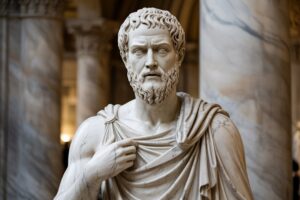
The truth is that procrastination rarely looks like giving up completely. Instead, it often disguises itself as preparation, careful planning, or the belief that you will have more time and energy in the future. As the Stoic philosopher Seneca observed, people often spend their lives preparing to live rather than actually living.
The good news is that you do not need extraordinary motivation or superhuman willpower to overcome procrastination. Stoic philosophy offers practical ways to stop making excuses, focus on what matters, and take consistent action, even when you do not feel like it.
1. Stop Waiting for Motivation and Just Show Up
One of the biggest mistakes people make is believing they need to feel motivated before they can get anything done. They wait for inspiration to strike, for their circumstances to improve, or for the perfect moment when everything finally falls into place. Unfortunately, that moment may never come.
The Stoic approach is much simpler: show up and do the work. You cannot always control how motivated you feel, but you can control your schedule, your routine, and your willingness to keep your commitments.
Consider the example of Thomas Edison, who emphasized the importance of persistent work rather than relying entirely on inspiration. His approach reminds us that great ideas often emerge when we consistently put ourselves in a position to discover them.
Writers understand this principle particularly well. Sitting down at your desk every day, even when you feel tired or uninspired, creates opportunities for ideas to develop that would never appear if you kept waiting for the right mood.
The same lesson applies to athletes, business owners, students, and anyone pursuing a meaningful goal. You will not perform at your best every day, but showing up consistently gives you a chance to improve and make progress.
The story of baseball player Lou Gehrig illustrates this point. His talent was undeniable, but his dedication to playing and working consistently was also an important part of his success, even when he experienced difficult periods.
Choreographer Twyla Tharp follows a similar principle by focusing on the first action required to begin her work. Rather than debating whether she feels ready, she gets out of bed, prepares to leave, and takes herself to the studio.
You can apply this strategy to almost anything. Instead of worrying about completing an entire project, focus on getting out of bed, opening your laptop, putting on your running shoes, or taking the first small step toward your goal.
2. Focus on the Next Right Thing
Once you have shown up, another challenge appears. You may sit down to work but start worrying about how much you have to accomplish, how difficult the task will be, or how far you still have to go.
This is where procrastination finds another opportunity to take control. You have already overcome the excuse that prevented you from starting, but now your mind begins searching for reasons to stop before making meaningful progress.
The Stoic solution is to focus on the next right thing rather than the entire journey. You do not need to finish everything today, and you certainly do not need to solve every problem at once.
For example, if you are writing a book, your immediate goal does not have to be completing the entire manuscript. It might simply be writing two pages today, knowing that tomorrow you can write another two pages and gradually build toward a finished draft.
The same principle applies to fitness, studying, and professional responsibilities. If you are struggling through a workout, ask yourself whether you can complete one more repetition, run for another minute, or take one more step toward finishing.
Marcus Aurelius encouraged people to concentrate on the situation directly in front of them rather than allowing their imagination to make everything seem unbearable. When you focus on the present task, you stop giving distant worries unnecessary power over your actions.
Small actions may not seem impressive on their own, but their cumulative effect can be extraordinary. Every time you complete the next right thing, you create momentum that makes the following step easier.
3. Eliminate Unnecessary Tasks and Distractions
Sometimes procrastination has less to do with laziness and more to do with having too much on your plate. When your schedule is overloaded, your mind becomes scattered, and even important tasks can feel impossible to begin.
Seneca expressed this idea by observing that trying to be everywhere can leave you nowhere. When you divide your attention among too many responsibilities, you may spend the entire day being busy without making meaningful progress on anything that matters.
Marcus Aurelius offers a useful question for these situations: Is this essential? Before committing your time and energy to another task, consider whether it genuinely contributes to your goals or simply occupies your attention.

Think about how easily you can spend an hour answering emails, organizing documents, or checking messages while avoiding the important phone call or project you actually need to complete. These activities may look productive, but they can become convenient distractions from more demanding work.
One practical way to simplify your workload is to ask yourself three questions about every task. Is this something only I can do, can I delegate it, or can I eliminate it entirely?
YOU MAY LIKE



If a responsibility does not need your attention, remove it from your schedule or find someone else who can handle it. This creates more room for the work that genuinely deserves your effort.
Publius Syrus compared the easiest place to cross a river to its source. The lesson is that problems are often easier to handle before they become complicated, so it is worth questioning unnecessary commitments before they consume your time.
Beating procrastination does not mean forcing yourself to do everything on your list. Sometimes the smartest move is to shorten that list, protect your attention, and concentrate on the few things that can make the biggest difference.
4. Stop Letting Perfectionism Keep You Stuck
Perfectionism often looks like ambition, but it can quietly become another form of procrastination. You want your work to be excellent, so you keep preparing, revising, researching, and adjusting until you convince yourself that you are finally ready to begin.
The problem is that perfection can become an impossible standard. Instead of making progress, you spend your time worrying about every possible mistake and imagining how other people might judge the finished result.
A useful lesson often attributed to Winston Churchill is that perfectionism can lead to paralysis. High standards are valuable, but they become counterproductive when they prevent you from completing anything at all.
Consider the writing process. If you criticize every sentence while trying to produce your first draft, you may lose your confidence before you have written enough to work with.
A better approach is to separate creating from editing. Give yourself permission to write a rough draft, make mistakes, and produce something imperfect that you can improve later.
Marcus Aurelius reminded himself that people do not live in an imaginary perfect world. We live in reality, where circumstances are rarely ideal and progress depends on working with what we have.
The story of choreographer Martha Graham illustrates how perfectionism can interfere with achievement. While working on a major dance project, she became so dissatisfied with her work that she considered abandoning it entirely.
Her collaborator, Louis Horst, reminded her that creative works do not all need to reach the same level of greatness. He used Beethoven’s Sixth Symphony, which followed the Fifth, to illustrate that one worthwhile work can lead to another, even when it does not surpass everything that came before it.
The lesson is simple: an imperfect finished project is often more valuable than a perfect idea that never leaves your mind. Completing one piece of work also gives you the opportunity to receive feedback, make improvements, and move on to the next challenge.
At some point, you have to stop polishing and release what you have created. You can learn from the results and improve your next attempt, but you cannot improve work that you never finish.
5. Build Habits That Make Action Automatic
Relying on willpower for every decision makes daily life unnecessarily exhausting. If you must repeatedly convince yourself to exercise, write, study, or begin working, you create more opportunities for procrastination to take hold.
The psychologist William James emphasized the value of making everyday activities habitual. When ordinary decisions become automatic, your mind has more energy available for important tasks that require thought, creativity, and judgment.
This is why routines are so powerful. When you establish a regular time for working, exercising, preparing meals, or getting ready for bed, you reduce the number of decisions you must make each day.
For example, imagine deciding every morning whether you should exercise. You might consider the weather, your energy level, your schedule, and whether you would rather stay in bed.

Now imagine that you have already established a routine of exercising every weekday morning. Instead of debating whether to go, you simply wake up, put on your clothes, and begin the routine you have practiced many times before.
The same principle works for creative projects and professional responsibilities. You might decide to write every morning before checking your phone or review your most important task before opening your email inbox.
Seneca emphasized the importance of living with intention rather than allowing life to become erratic. Creating structure helps you spend less energy deciding what to do next and more energy actually doing it.
Start with a simple routine that fits your life. Choose a specific time, identify the first action, and repeat the process until it becomes a familiar part of your day.
You do not need to create an elaborate schedule that controls every minute. The goal is to establish enough consistency that starting requires less negotiation with yourself.
6. Remember That Life Is Too Short to Keep Waiting
One of the most powerful ideas in Stoic philosophy is memento mori, a Latin expression that reminds us of our mortality. It encourages us to remember that life is limited and that we cannot assume we will always have another opportunity to do what matters.
Procrastination often depends on the comforting belief that tomorrow will always be available. We postpone meaningful work because we assume we will have more time later, without considering that the future is never guaranteed.
Seneca argued that life is not necessarily too short, but that we waste much of the time we are given. His message challenges us to recognize how much of our lives disappears through hesitation, unnecessary distractions, and endless postponement.
Imagine discovering that you have very little time left to live. Suddenly, many of the things that occupy your attention would seem less important, while the goals and relationships you have neglected would become much more meaningful.
You might stop worrying so much about other people’s opinions, abandon commitments that no longer matter, and finally begin working toward something you have wanted to accomplish for years. The exercise reveals how easily fear and distraction can keep us from using our time well.
This does not mean you should live in constant fear of death or rush through every decision. Instead, use the awareness of life’s uncertainty as a reminder to act deliberately and stop postponing the things that genuinely matter.
Ask yourself what you would regret leaving unfinished if you knew your opportunities were limited. Then identify one meaningful action you can take today, even if it is small.
You do not have to wait until life forces you to recognize the value of your time. You can begin treating the present moment as an opportunity worth using right now.
7. Focus on Doing Your Best, Not on What Others Think
Fear of judgment is another common reason people procrastinate. You may hesitate to start a business, publish your work, apply for an opportunity, or share an idea because you are worried about what other people will say.
You might spend so much time imagining criticism that you never give yourself a fair chance to succeed. In some cases, you may even convince yourself that the task does not matter simply to protect yourself from the disappointment of failing.
Stoicism teaches that you must distinguish between what you can control and what you cannot. You can control the effort you put into your work, the decisions you make, and the way you respond to challenges, but you cannot control every person’s opinion or reaction.
This distinction can be liberating. Instead of spending your energy trying to guarantee a positive response, direct that energy toward producing the best work you can with the resources and abilities available to you.
A memorable example comes from Jimmy Carter’s early career after graduating from the United States Naval Academy. During an interview with Admiral Hyman Rickover, Carter was asked about his academic standing and the effort he had put into his studies.
Carter was proud of his achievements, but when Rickover asked whether he had always done his best, he realized that the honest answer was no. He remembered opportunities he had neglected, occasions when he had not given his full effort, and times when he could have pushed himself further.
Rickover’s follow-up question was simple: Why not? That question stayed with Carter because it challenged him to examine not just what he had achieved, but whether he had truly given his best to the opportunities available to him.

There is an important difference between doing your best and trying to be perfect. Perfectionism demands an impossible result, while doing your best means making a sincere effort with the time, energy, and abilities you have that day.
Some days you will feel energetic and accomplish a great deal. Other days, you may be tired, discouraged, or dealing with personal difficulties, and your best effort may look very different.
What matters is that you keep showing up and giving what you reasonably can. Over time, those daily efforts accumulate into progress that would have been impossible if you had spent your life worrying about how others might judge you.
8. Take Action Instead of Just Talking About It
It is easy to talk about the person you want to become. You might describe yourself as a future writer, entrepreneur, athlete, or successful professional while spending very little time doing the activities that would help you become that person.
Stoic philosophy emphasizes action over empty promises. The Latin expression acta non verba means deeds, not words, reminding us that our values become meaningful through what we actually do.
If you want to be a writer, the important question is not whether you think of yourself as one. It is whether you write, practice your craft, and make consistent progress toward completing your work.
The same applies to fitness. Planning workouts, watching exercise videos, and discussing your goals can all be useful, but none of them replaces actually going to the gym and doing the exercises.
Ralph Waldo Emerson emphasized the importance of action rather than spending all your time in reflection and deliberation. Thinking is valuable when it helps you make better decisions, but it becomes an obstacle when you use it to avoid taking the next step.
You do not need to understand every detail before you begin. You need enough information to take a reasonable first step, learn from the experience, and adjust your approach as you go.
EDITORS' RECOMMENDATIONS



This is also why it helps to stop endlessly studying productivity systems and searching for new motivational advice. Once you understand what needs to be done, close the distractions and direct your attention toward the task itself.
You become the person you want to be through repeated actions, not simply by describing that person in your mind. Start practicing the habits you admire, keep your commitments, and let your behavior reflect the values you claim to believe in.
Stop Saying Tomorrow and Start Today
Beating procrastination is not about developing superhuman discipline or feeling motivated every moment of the day. It is about learning to take action despite discomfort, simplifying your responsibilities, building reliable habits, and focusing on the work that genuinely matters.
The Stoic approach reminds us that we do not need perfect circumstances to make progress. We need to show up, take the next right step, and do our best with the time and energy available to us.
Some days, your progress will be impressive, while other days, simply keeping your commitment will be an achievement. Both matter because consistent effort, accumulated over time, can take you much further than occasional bursts of enthusiasm.
Remember that your time is limited, and the future is never guaranteed. Every day spent waiting for the perfect moment is a day you cannot get back.
So stop making promises about what you will do tomorrow. Choose the task that matters most, eliminate the distractions standing in your way, and take the first step today.
You do not have to be perfect, and you do not have to feel ready. You just have to show up, do your best, and keep going.