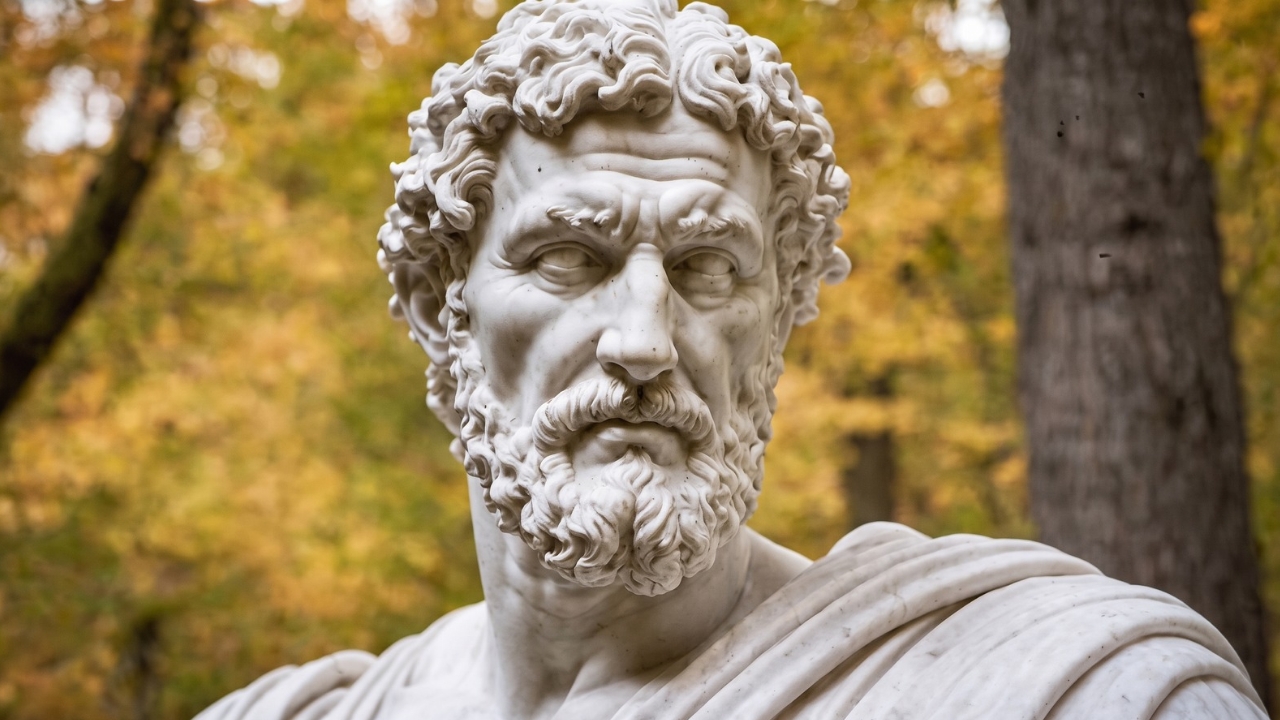
Have you ever wondered how some people manage to stay calm when life gets difficult, while others become overwhelmed by even the smallest problems? The difference often comes down to how they think, respond to challenges, and manage their emotions.
Stoicism is an ancient philosophy that teaches us how to live with greater wisdom, discipline, and inner peace. Its lessons are still relevant today because they help us focus on what matters, accept what we cannot change, and respond to life’s challenges with a clearer mind.
The good news is that you don’t need to be a philosopher to benefit from Stoicism. By practicing a few simple habits every day, you can build a stronger mindset, improve your relationships, and stop allowing circumstances beyond your control to steal your peace.
Let’s explore 16 Stoic habits that can help you approach life’s problems differently and become a calmer, wiser, and more resilient person.
1. Cultivate Virtue and Do What Is Right
One of the most important principles of Stoicism is cultivating virtue. This means living with wisdom, courage, justice, and self-control, even when doing the right thing is uncomfortable or difficult.
Seneca emphasized that virtue is the true good, reminding us that a meaningful life is built on character rather than wealth, status, or possessions. When you make decisions based on your values instead of your emotions or personal interests, you develop a stronger sense of integrity and self-respect.
Imagine someone treating you unfairly and provoking you to respond with anger. Instead of allowing resentment to control your reaction, you can choose patience, fairness, and understanding without abandoning your principles.
Practicing virtue helps you become the kind of person you can respect, regardless of how others behave. It also creates a positive influence on the people around you because integrity and kindness often inspire others to act similarly.
2. Live With Intention
Many people move through life without thinking carefully about how they spend their time, energy, or attention. They stay busy with endless responsibilities but rarely stop to ask whether their actions are moving them closer to the life they genuinely want.
Stoicism encourages you to live with intention by making sure your daily choices reflect your values and priorities. Seneca’s teachings remind us that the quality of our lives matters more than simply the number of years we spend living.
Start by asking yourself what deserves your attention today. Instead of automatically responding to every demand, distraction, or opportunity, decide which activities contribute meaningfully to your goals and well-being.
When you live intentionally, you gain a clearer sense of direction and purpose. You become less likely to waste your energy on things that do not matter and more capable of making decisions that leave you feeling fulfilled.
3. Embrace Moderation
It is easy to believe that more money, more entertainment, more possessions, and more success will automatically make life better. However, constantly chasing more can leave you feeling exhausted, dissatisfied, and distracted from the things that already bring you happiness.
Stoicism teaches the importance of moderation, which means avoiding excess and finding a healthy balance in your desires and actions. Aristotle also explored this idea in his Nicomachean Ethics, explaining that virtue often involves finding a balanced path between extremes.
Think about someone who works so many hours that they have no time for family, rest, or personal interests. Although their dedication might help them achieve professional success, the lack of balance can eventually damage their health and relationships.
Moderation allows you to enjoy life’s pleasures without becoming dependent on them. By learning when enough is enough, you can make wiser decisions, avoid unnecessary regrets, and focus on what truly matters.
4. Cultivate Self-Discipline
Self-discipline is the ability to do what needs to be done even when you do not feel motivated. It helps you remain committed to your goals instead of allowing temporary emotions, distractions, or temptations to determine your behavior.
The Stoic philosopher Epictetus taught that genuine freedom requires mastery over oneself. When you cannot control your impulses, you may find yourself repeatedly making choices that conflict with your values and long-term interests.
Consider someone who wants to improve their health but constantly skips exercise and chooses unhealthy habits because they feel easier. Without discipline, their goals remain wishes rather than becoming meaningful changes.
Developing self-discipline does not mean being harsh with yourself or expecting perfection. It means building the ability to make consistent choices, even when they require effort, so that your daily actions gradually support the life you want to create.

5. Delay Gratification
One of the biggest obstacles to personal growth is the desire to feel good immediately. We often choose temporary comfort over long-term progress because the immediate reward feels more appealing than a benefit that may take months or years to achieve.
Stoicism encourages patience and reminds us that worthwhile achievements require time. Epictetus used the example of fruit to explain that grapes and figs cannot appear fully ripe instantly because they must first grow and develop.
YOU MAY LIKE



This lesson applies to almost every meaningful goal in life. Building financial stability, improving your health, learning a valuable skill, or developing stronger relationships requires repeated effort rather than a single decision.
When you learn to delay gratification, you become better at resisting distractions and staying committed to your priorities. Instead of asking only what will make you happy right now, you begin considering what will help you build a better future.
6. Pursue Lifelong Learning
A person who believes they already know everything leaves little room for improvement. Life constantly presents new situations, and the ability to learn from experience can help you respond more wisely when circumstances change.
Seneca encouraged continuous learning throughout life, emphasizing that personal growth should never stop. From a Stoic perspective, learning is not merely about collecting information but also about improving your judgment, character, and understanding of yourself.
You can practice this habit by reading useful books, listening to thoughtful discussions, asking questions, and reflecting on your mistakes. When something goes wrong, try to identify what the experience can teach you rather than focusing only on how unfair or frustrating it feels.
Lifelong learning keeps your mind open and helps you develop better ways of handling challenges. Over time, the knowledge and wisdom you gain can make you more confident in your decisions and better prepared for unfamiliar situations.
7. Develop Empathy
It is easy to judge other people when their behavior frustrates us or their decisions seem unreasonable. However, we rarely know every difficulty, fear, or personal experience that may have influenced their actions.
Stoicism encourages empathy, which means making an effort to understand another person’s perspective before deciding how to respond. Marcus Aurelius, in his Meditations, repeatedly reflected on the importance of recognizing our shared humanity and approaching others with understanding.
Imagine a friend who speaks rudely to you during a difficult day. You could immediately assume they no longer respect you, or you could pause and consider whether they are dealing with stress or another problem you know nothing about.
Empathy does not mean accepting mistreatment or allowing people to cross your boundaries. Instead, it helps you respond fairly, avoid unnecessary conflict, and maintain healthier relationships without letting someone else’s behavior determine your character.
8. Practice Gratitude
When life becomes difficult, it is easy to focus entirely on what is missing. You may think about the money you have not earned, the opportunities you have lost, or the goals you have not yet achieved while overlooking the good things already present in your life.
Stoicism teaches the importance of appreciating what you have instead of constantly chasing what you lack. Gratitude helps you recognize the value of ordinary experiences, meaningful relationships, and opportunities that you might otherwise take for granted.
A simple way to develop this habit is to spend a few minutes each day reflecting on what you appreciate. It could be your health, a supportive friend, a meal, a useful lesson from a difficult experience, or simply another opportunity to improve yourself.
Practicing gratitude does not require you to pretend that everything is perfect. It allows you to acknowledge your difficulties while remembering that your life may still contain things worth appreciating, helping you maintain a more balanced perspective during challenging times.
9. Foster Resilience
Life will not always follow your plans, and some challenges will arrive when you feel least prepared for them. Resilience is the ability to face these difficulties, recover from setbacks, and continue moving forward without allowing disappointment to define your entire life.
Marcus Aurelius reflected on the strength of a rock that remains standing while a hammer eventually wears down. The lesson is that we can develop a similar steadiness by learning to withstand difficulties without immediately surrendering to frustration or despair.
Suppose you lose an important opportunity after investing considerable time and effort. You may feel disappointed, but resilience helps you recognize that one setback does not erase your abilities or determine everything that happens next.

Rather than viewing every difficulty as proof that you have failed, look for what you can learn and how you can adapt. Resilience does not mean avoiding pain or pretending that setbacks do not hurt; it means finding the strength to keep going despite them.
10. Build Emotional Resilience
Resilience helps you recover from difficulties, while emotional resilience focuses on how you manage your feelings when life becomes stressful. Anger, fear, disappointment, and sadness are natural human emotions, but acting on every feeling immediately can create problems that might otherwise have been avoided.
Seneca observed that difficulty can strengthen the mind in much the same way that physical labor strengthens the body. When you learn to face uncomfortable situations without reacting impulsively, you gradually develop greater emotional stability.
For example, imagine receiving criticism that feels unfair or insulting. Instead of immediately arguing or saying something you may regret, take a moment to understand what you are feeling and decide whether a response is necessary.
The goal is not to suppress your emotions or pretend they do not exist. It is to understand them, recognize what triggers them, and choose a constructive response rather than allowing a temporary emotional state to control your behavior.
11. Simplify Your Life
Modern life often encourages people to accumulate more possessions, accept more responsibilities, and fill every available moment with activity. Unfortunately, having more things to manage can create additional stress without necessarily making life more satisfying.
Stoicism reminds us that peace does not depend on owning everything we desire. Seneca’s reflections on simplicity encourage us to recognize that a quieter, less complicated life can be more fulfilling than one filled with possessions and endless obligations.
You can begin simplifying your life by removing unnecessary commitments, organizing your surroundings, and reducing distractions that consume your attention. Consider whether the things you spend money on, the activities you participate in, and the responsibilities you accept genuinely contribute to your well-being.
When you eliminate unnecessary complications, you create more room for meaningful relationships, personal growth, rest, and enjoyment. Simplicity is not about rejecting everything you own but about making sure your possessions and commitments serve your life rather than control it.
12. Embrace Impermanence
One of the most difficult truths to accept is that nothing remains exactly the same forever. Relationships change, circumstances shift, opportunities disappear, and even the emotions that feel overwhelming today will eventually take a different form.
The ancient philosopher Heraclitus expressed this idea through the image of a river that is never exactly the same when someone enters it again. His observation reminds us that change is a natural part of existence, affecting both the world around us and the people we become.
Accepting impermanence can help you appreciate good experiences without desperately trying to hold on to them. It can also help you face difficult periods with greater patience because you understand that your current circumstances are not necessarily permanent.
This habit does not mean becoming indifferent to the people or experiences you love. Instead, it encourages you to value them while they are present and develop the courage to adapt when life inevitably changes.
13. Contemplate Your Mortality
Thinking about death may seem uncomfortable, but Stoic philosophy treats awareness of mortality as a way to live more meaningfully. The practice, often called memento mori, reminds us that our time is limited and that we should be careful about how we choose to spend it.
Marcus Aurelius encouraged people to remember that life can end unexpectedly and to let this awareness influence their thoughts, words, and actions. Rather than using mortality as a reason to become fearful, he viewed it as an opportunity to focus on what deserves our attention.
Imagine arguing with someone you love over a small disagreement. In the heat of the moment, proving that you are right might seem more important than anything else, but remembering that neither of you has unlimited time can help you reconsider your priorities.
Contemplating mortality encourages you to spend less time worrying about trivial matters and more time nurturing relationships, pursuing meaningful goals, and living according to your values. It reminds you that the opportunity to make a difference exists in the present, not in some distant future you are guaranteed to reach.
14. Focus on What You Can Control and Accept What You Cannot
One of the central teachings of Stoicism is the distinction between what lies within our control and what does not. Many of our frustrations come from trying to control other people’s opinions, unexpected events, or circumstances that we cannot change.
Epictetus captured this principle by teaching that our judgments and responses matter more than simply what happens to us. Although we cannot always choose our circumstances, we can often choose how we interpret them and what actions we take next.

Consider being stuck in traffic when you are already running late. You cannot make every vehicle disappear or force the road to clear, but you can choose to remain calm, listen to something useful, or accept that your arrival may be delayed.
When facing a problem, pause and ask yourself whether it is something you can influence. If it is, identify the practical steps you can take; if it is not, stop wasting energy fighting reality and direct your attention toward what remains within your control.
The more consistently you practice this distinction, the less power uncontrollable circumstances will have over your peace of mind. With time, you can become more focused, adaptable, and capable of responding to problems without creating additional suffering for yourself.
15. Embrace Mindfulness and the Present Moment
Many people spend their days physically present while their minds remain trapped in the past or worried about the future. They replay embarrassing mistakes, imagine problems that may never happen, and overlook the experiences unfolding directly in front of them.
Stoicism encourages us to give our attention to the present because it is the only moment in which we can actually act. Marcus Aurelius emphasized the importance of concentrating on the present rather than allowing our minds to become overwhelmed by thoughts about what has already happened or what might happen later.
Mindfulness helps you notice your thoughts, feelings, and surroundings without automatically reacting to everything that enters your mind. It does not mean ignoring past lessons or refusing to plan for the future, but learning to do those things without becoming mentally trapped in them.
You can begin practicing mindfulness through a few simple daily activities.
- Practice mindful breathing. Spend a few minutes paying attention to your breathing, noticing the air entering and leaving your body without trying to force anything.
- Observe without judgment. When a difficult situation arises, notice what is happening before labeling it as a disaster or assuming the worst possible outcome.
- Give ordinary tasks your full attention. Whether you are walking, eating, washing dishes, or talking with someone, try to focus on the experience instead of constantly reaching for another distraction.
These small practices can help you become more aware of your reactions and better able to respond thoughtfully. They also allow you to appreciate everyday experiences that you might otherwise overlook while worrying about things beyond your immediate reach.
16. Turn Stoic Wisdom Into Daily Action
Understanding Stoic philosophy is valuable, but reading about wisdom is not the same as practicing it. The real benefit comes when you begin applying these principles to ordinary decisions, difficult conversations, unexpected setbacks, and the small frustrations that occur throughout your day.
EDITORS' RECOMMENDATIONS



You can start by choosing one Stoic habit to practice consistently instead of trying to change every part of your life at once. For example, you might spend a week focusing on emotional control, then work on gratitude, self-discipline, or accepting what you cannot control.
At the end of each day, take a few minutes to reflect on how you handled your experiences. Ask yourself whether you acted according to your values, whether you reacted too quickly to something frustrating, and what you could do differently next time.
Remember that personal growth is a gradual process rather than a destination you reach overnight. The more you practice these habits, the more opportunities you create to respond to challenges with wisdom, patience, courage, and self-control.
Conclusion
Stoicism offers practical lessons for dealing with many of the difficulties we face in everyday life. By cultivating virtue, practicing gratitude, developing resilience, embracing change, and learning to distinguish between what we can and cannot control, we can build a more peaceful and meaningful way of living.
You do not need to eliminate every problem to improve your life. Sometimes, the greatest change comes from learning to approach the same problems with a different mindset, responding more thoughtfully to difficult situations, and refusing to let circumstances beyond your control determine your happiness.
Start with the habit that speaks most strongly to you and practice it consistently. As you become more intentional about your thoughts and actions, you can develop greater emotional strength, improve your relationships, and spend more of your limited time on what truly matters.
Ultimately, the Stoic lesson is simple: you may not control everything that happens to you, but you can work on controlling how you respond. That is where greater freedom, resilience, and inner peace begin.