Did you know that the way you sleep tonight could quietly influence your health, energy, and independence as you age?
It may sound surprising, but many health experts now believe that sleeping position plays a major role in how the body repairs itself overnight. Research from organizations like the National Institute on Aging suggests that certain sleeping habits can contribute to issues such as poor circulation, chronic pain, breathing problems, and disrupted sleep—especially in older adults.
Many seniors struggle with sleep as they age. They toss and turn, wake up tired, or experience stiffness and discomfort in the morning. Often, people assume the issue is simply not getting enough sleep. However, scientists are increasingly discovering that how you sleep may be just as important as how long you sleep.
Your sleeping position can either support your spine, improve breathing, and enhance blood circulation—or it can do the opposite.
In this article, we’ll explore:
- The four worst sleeping positions for seniors
- The four best sleep positions that promote healing and comfort
- Small adjustments that can dramatically improve sleep quality
These simple changes might help you wake up feeling more refreshed, energized, and comfortable.
The 4 Worst Sleeping Positions for Seniors
1. Sleeping on Your Stomach (Face Down)
For some people, sleeping on the stomach feels relaxing. It can feel comforting to lie face down with your arms tucked under the pillow.
However, this position can create serious strain on the body—especially for adults over 60.
When you sleep on your stomach, your neck must turn sharply to one side so you can breathe. Holding this position for hours puts stress on the cervical spine and neck muscles. Over time, this may lead to:
- Neck stiffness
- Headaches
- Nerve irritation
- Tingling in the arms or hands
According to experts from the American Chiropractic Association, stomach sleeping can contribute to cervical misalignment, which may affect balance and coordination in older adults.
Another issue is breathing. When you lie face down, the chest presses against the mattress. This limits how fully your lungs can expand, often leading to shallow breathing throughout the night.
For seniors, reduced oxygen flow during sleep may increase fatigue, brain fog, and even blood pressure.
The lower back also suffers in this position. Stomach sleeping forces the spine into an unnatural curve, which can worsen existing conditions like:
- Arthritis
- Herniated discs
- Chronic back pain
While it may feel comfortable at first, stomach sleeping can slowly cause long-term strain on the body.
2. Sleeping in a Tight Fetal Position
The fetal position—curled up with knees drawn tightly to the chest—is one of the most common sleeping positions.
Many people find it comforting because it mimics a protective posture. But curling too tightly can create problems, especially for seniors.
When the knees are pulled close to the chest, the body compresses the diaphragm. This makes it harder for the lungs to fully expand while breathing.
According to the National Sleep Foundation, restricted breathing during sleep may lead to:

- Lower oxygen intake
- Morning headaches
- Fatigue
- Poor sleep quality
The spine is also affected. A tightly curled position forces the back into a C-shaped curve, which can gradually shorten muscles and strain ligaments.
Over time, this posture may contribute to:
- Increased spinal stiffness
- Poor posture
- Balance problems
For seniors who already experience reduced flexibility, this position can make the body feel more rigid and uncomfortable in the morning.
A gentler side sleeping posture (without curling too tightly) is usually a healthier alternative.
3. Lying Flat on Your Back Without Support
For many years, sleeping flat on your back was considered the ideal position for spinal alignment.
However, for many seniors, this position can create hidden health risks—especially when the head and neck are not properly supported.
When lying completely flat, gravity can cause the tongue and soft tissues in the throat to fall backward, narrowing the airway. This can lead to snoring and breathing interruptions during sleep.
The American Academy of Sleep Medicine notes that sleeping flat on the back can worsen obstructive sleep apnea, a condition linked to:
- Stroke
- Heart disease
- Memory problems
- Chronic fatigue
Another concern is acid reflux.
Nearly half of adults over 65 experience reflux symptoms. When the head is level with the stomach, stomach acid can move upward into the esophagus more easily, causing discomfort and disrupted sleep.
Without proper pillow support, back sleeping can also strain the neck and lower spine.
For seniors who prefer sleeping on their back, a slight elevation of the head and knees can make this position much safer and more comfortable.
4. Sleeping in a Recliner Chair Every Night
Many older adults begin sleeping in recliners because it seems easier on the back or helps reduce heartburn.
Occasional naps in a recliner are usually fine. But sleeping in a recliner every night can lead to several health problems.
When the body stays in a semi-sitting position for long periods, circulation in the legs may slow down. This can cause:
- Swollen ankles
- Fluid retention
- Poor blood circulation
In some cases, poor circulation can increase the risk of deep vein thrombosis, a condition where blood clots form in the legs.
Another problem is muscle weakening. Sleeping in a recliner prevents the spine and hips from fully relaxing, which may contribute to:
- Lower back stiffness
- Reduced core strength
- Balance issues
The reclined posture can also limit deep sleep cycles. Even if someone sleeps for many hours in a chair, they may never reach the restorative stages of sleep that help repair the brain and body.

For long-term health, a supportive bed with proper positioning is usually the better choice.
The 4 Best Sleeping Positions for Seniors
Now that we’ve covered the positions to avoid, let’s look at the ones that can support healing, reduce pain, and improve sleep quality.
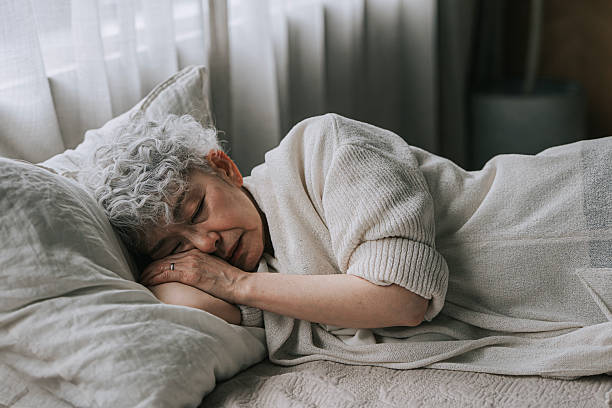
1. Side Sleeping with a Pillow Between the Knees
This is one of the most recommended sleep positions for older adults.
Sleeping on your side helps keep the spine naturally aligned. Placing a pillow between the knees prevents the top leg from pulling the pelvis out of alignment.
Experts at the Cleveland Clinic say this simple adjustment can help:
- Reduce lower back pain
- Ease pressure on the hips
- Improve spinal alignment
Side sleeping—particularly on the left side—may also help reduce acid reflux because the stomach stays lower than the esophagus.
It can also improve breathing and reduce snoring by keeping the airway open.
This position is especially helpful for seniors dealing with arthritis, hip pain, or sleep apnea.
2. Elevated Back Sleeping (Head and Knees Slightly Raised)
For those who prefer sleeping on their back, a slightly elevated position can be very beneficial.
Raising the upper body about 30 degrees allows gravity to help keep the airway open and prevent acid reflux.
The American Academy of Sleep Medicine reports that elevating the head and chest may reduce episodes of snoring and breathing interruptions during sleep.
Placing a pillow under the knees can further improve comfort by reducing pressure on the lower back.
This position can help with:
- Heartburn
- Mild sleep apnea
- Lower back tension
It allows the body to relax without placing stress on the spine.
3. The Starfish Position
The starfish position is a relaxed version of back sleeping where the arms rest gently outward instead of staying rigid at the sides.
This posture helps open the chest and shoulders, allowing for deeper breathing and improved circulation.
Research from the Harvard Medical School suggests that open-chest sleeping positions can help reduce tension in the neck and shoulders.
Benefits of the starfish position include:
- Less pressure on shoulder joints
- Improved upper-body circulation
- Reduced nerve compression in the neck
However, it works best when the head is supported by a comfortable pillow that keeps the neck aligned with the spine.
4. The 45-Degree Side Recline
Many geriatric sleep specialists consider this one of the most comfortable and supportive sleep positions for seniors.
The 45-degree side recline is a blend of side sleeping and slight elevation. The upper body is supported at an angle using pillows or a wedge cushion.
Research published in the Journal of Geriatric Sleep Studies suggests this posture may:
- Reduce acid reflux episodes
- Keep the airway open
- Improve spinal alignment
It also helps the body relax while maintaining healthy circulation.
For seniors dealing with arthritis, reflux, or breathing issues, this position can provide the benefits of multiple sleep postures at once.
Final Thoughts: Sleep Is a Powerful Form of Healing
Sleep is not just about resting—it is one of the body’s most important healing processes.
During sleep, the body repairs muscles, restores brain function, and strengthens the immune system. For seniors, the right sleeping position can make a huge difference in how the body recovers overnight.
Small changes—such as:
- Adding a pillow between the knees
- Elevating the head slightly
- Supporting the lower back
- Choosing a healthier sleep posture
can lead to less pain, deeper sleep, and more energy during the day.
The body continues to listen and respond even while we sleep. When we support it properly, it can repair itself more effectively.
So tonight, instead of simply going to bed, consider creating a sleep setup that helps your body heal.
Because sometimes the smallest adjustments can lead to stronger mornings, clearer thinking, and a healthier life.