
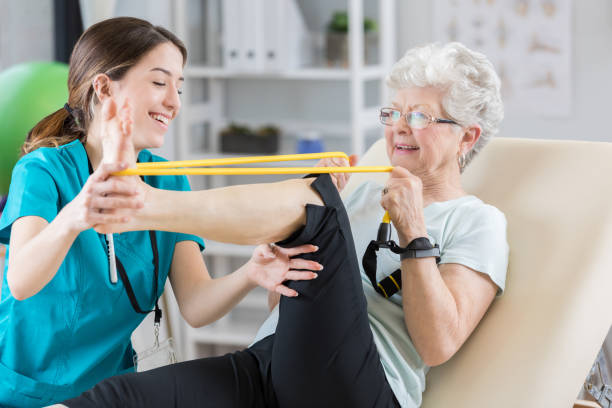
Getting older changes the way we think about exercise. Movements that once felt easy can become uncomfortable, and exercises often praised as “the best” may not always feel realistic for aging joints.
Squats are a good example.
They are often recommended for building strong legs, and for good reason. They work the thighs, hips, and core. But for many people in their 70s, 80s, and beyond, deep squats can put pressure on sensitive knees, challenge balance, and feel intimidating.
That raises an important question.
How do you strengthen your legs, improve stability, and reduce fall risk without punishing your joints?
The answer may be simpler than you think.
Some of the most effective leg strengthening exercises for older adults are not aggressive gym workouts at all. They are controlled, rehabilitation-style movements designed specifically for aging bodies. They focus on balance, mobility, and functional strength, which matters much more in everyday life than how much weight you can lift.
Strong legs do more than help you walk.
They help you get out of a chair with ease, climb stairs confidently, recover if you stumble, and stay independent longer.
That is why these five exercises matter.
Each one targets muscles that support daily movement and fall prevention. Better still, they can be done at home, require little or no equipment, and are gentle enough for many older adults to practice safely.
Let’s start with the simplest movement and work toward the one researchers consider one of the most powerful exercises for seniors.
1. Seated Marching Hold
This exercise may look easy, but it trains one of the most overlooked muscles for aging mobility, the hip flexors.
These muscles lift your thighs every time you walk, step onto a curb, or rise from bed. When they weaken, many people begin shuffling instead of stepping normally, which can increase the chance of falls.
A seated marching hold wakes up these muscles without putting stress on the knees.
How to Do It
- Sit in a sturdy chair with both feet flat on the floor.
- Keep your back naturally upright.
- Slowly lift one knee toward your chest.
- Raise it as high as feels comfortable.
- Hold for 5 seconds.
- Lower it slowly.
- Repeat with the other leg.
That counts as one repetition.
Goal
- 10 repetitions per leg
- 20 total marches
- Twice daily, morning and evening
Why It Works
This movement improves:
- Hip flexor strength
- Walking mechanics
- Ability to rise from a chair
- Balance during stepping motions
The hold is what makes this powerful.
Those few seconds force the muscles to engage and build the kind of strength that supports everyday movement.
Make It Harder Over Time
Once this becomes easy, progress by:
- Increasing holds to 8 or 12 seconds
- Adding a light ankle weight later
- Moving more slowly for greater muscle control
It may look simple, but simple often works best.
2. Wall Supported Heel Raises
Most people think leg strength begins and ends with thighs. That is a mistake.
Calf muscles play a huge role in walking, balance, and stability. They help push you forward when you walk and absorb impact with every step.
Weak calves can make every surface feel less secure. Heel raises help rebuild that support.
How to Do It
Stand facing a wall.
Place your hands lightly against it for balance.
Follow these steps:
- Keep feet hip width apart.
- Slowly rise onto your toes.
- Lift your heels as high as possible.
- Hold at the top for 3 seconds.
- Lower slowly for another 3 seconds.
That lowering phase matters.
It helps build strength just as much as lifting.

Goal
- 12 to 15 repetitions
- 3 sets
- Rest 60 seconds between sets
- Perform 3 times weekly
Benefits
Regular heel raises can improve:
- Ankle stability
- Walking power
- Balance on uneven ground
- Confidence while moving
Strong calves make everyday walking feel steadier and safer.
Progression Option
When ready, try single-leg heel raises. Perform one full set on one leg before switching.
This increases the balance challenge and strengthens ankle stabilizers even more.
YOU MAY LIKE



3. Sit-to-Stand Pause
Standing up from a chair is one of the most functional movements you do every day.
But adding a pause turns it into a serious leg strengthening exercise.
This movement targets the quadriceps, the large muscles on the front of the thighs that support your knees and help with nearly every lower body task.
How to Do It
Use a sturdy chair without armrests.
- Sit with feet flat.
- Cross arms over your chest.
- Lean slightly forward.
- Begin standing.
- Stop halfway up.
- Hold that midpoint for 3 seconds.
- Finish standing.
- Slowly sit back down over 3 seconds.
That midpoint pause removes momentum.
Your muscles have to do the work.
Goal
- 8 repetitions
- 2 sets
- Rest 90 seconds between sets
- Practice every other day
Why It Is So Effective
This movement strengthens:
- Quadriceps
- Glutes
- Knees
- Functional sit-to-stand ability
And because it mirrors daily life, the strength carries directly into real-world movement.
Beginner Tip
If a 3-second hold feels too difficult, begin with:
- 1 second pauses
- Fewer repetitions
- Using a slightly higher chair
Progress matters more than perfection.
Even small improvements add up.
4. Side-Lying Leg Lift With Hold
This exercise targets a muscle many people never think about. (The gluteus medius).
It sits on the side of your hip and plays a major role in preventing sideways falls, the kind often linked to hip fractures.
This muscle keeps your pelvis level every time you stand on one leg during walking.
When it weakens, balance can suffer.
How to Do It
Lie on one side on a mat or firm bed.
- Stack your legs.
- Keep knees straight.
- Slowly lift the top leg 12 to 18 inches.
- Hold for 5 seconds.
- Lower slowly over 2 seconds.
- Repeat 10 times.
Then switch sides.
Goal
- 10 repetitions per side
- 4 sessions per week
Form Matters
Keep hips stacked.
Do not let the top hip roll backward.
That common mistake shifts the work away from the target muscle.
Move slowly and stay controlled.
Benefits
This exercise supports:
- Side-to-side balance
- Hip stability
- Walking control
- Fall prevention
Bonus Challenge
After your tenth rep, lift once more and hold as long as possible.
This “burnout hold” can increase endurance in these important stabilizing muscles.

Later, you can add a light resistance band around the ankles, but master bodyweight first.
5. Chair Supported Single-Leg Balance Tap
If one exercise deserves a place in nearly every senior fitness routine, it may be this one.
Because it combines three things at once:
- Strength
- Balance
- Coordination
And those three together are what help prevent falls.
Unlike traditional exercises that train both legs equally, this movement mimics real life.
Walking, turning, stepping over obstacles, and reaching all require single-leg control.
This trains exactly that.
How to Do It
Stand behind a sturdy chair.
Rest fingertips lightly on the chair back.
- Shift weight onto your right leg.
- Lift left foot slightly.
- Tap left foot forward.
- Return to center.
- Tap to the side.
- Return to center.
- Tap backward.
- Return to center.
That is one full cycle.
Complete 5 cycles, then switch legs.
Goal
- 5 cycles per leg
- 2 sets
- 5 days per week
Move slowly.
Control matters far more than speed.
Each tap should take about two seconds out and two seconds back.
Why It Works
This movement trains:
- Quadriceps
- Hamstrings
- Calves
- Glutes
- Ankle stabilizers
- Foot muscles
It teaches your whole lower body to work together.
That is real-world strength.
Progression
As balance improves:
- Use fewer fingers on the chair
- Hover hands above the chair
- Eventually try without support
Each reduction increases the challenge.
Try It Barefoot
If safe, practice barefoot.
It can activate stabilizing muscles in the feet and ankles even more.
Those tiny muscles often get ignored, yet they play a huge role in preventing stumbles.
A Simple Weekly Routine to Start
If doing all five at once feels overwhelming, begin with a simple schedule.
Example Beginner Routine
Monday
- Seated Marching Hold
- Wall Supported Heel Raises
- Balance Taps
Tuesday
- Seated Marching Hold
- Side-Lying Leg Lifts
Wednesday
- Sit-to-Stand Pause
- Heel Raises
- Balance Taps
Thursday

- Light recovery walk
- Seated Marching Hold
Friday
- Sit-to-Stand Pause
- Side-Lying Leg Lifts
- Balance Taps
Weekend
- Gentle walking
- Repeat favorite exercise
Consistency beats intensity.
Always.
A Few Safety Tips Before You Begin
Keep these in mind:
- Use a sturdy chair, not a rolling one
- Move slowly and never rush repetitions
- Stop if you feel pain, dizziness, or instability
- Keep water nearby
- Speak with a healthcare provider before starting if you have medical concerns
Exercise should challenge you.
It should not frighten you.
Why Leg Strength Matters More With Age
After 70, strength is no longer only about fitness.
It becomes about freedom.
Strong legs help you:
- Stay independent
- Reduce fall risk
- Protect your joints
- Move with confidence
- Keep doing the things you love
And perhaps most importantly, strong legs help preserve quality of life.
That is worth working for.
Conclusion
You do not need deep squats to build stronger legs.
You do not need a gym membership.
You do not need punishing workouts.
What you need are movements that respect aging joints while strengthening the muscles that matter most.
These five exercises do exactly that.
Start with one if five feels too much.
Begin where you are.
The biggest secret to stronger legs in your 70s, 80s, and beyond is not finding a perfect routine.
It is doing something consistently.
One chair.
One step.
One hold.
One day at a time.
Your future mobility may depend on what you start practicing today.