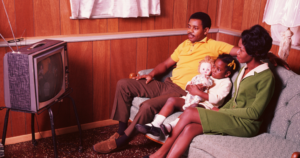
Every time I think about growing up in the 60s or 70s, I feel a weird mix of nostalgia and disbelief. Life felt simple, but it also demanded a lot from us.
I sometimes laugh when younger folks freak out because their Wi-Fi drops for 10 seconds. Meanwhile, many of us survived entire afternoons without knowing where anyone was or what time it even was, lol.
If you lived through those decades, you already know the vibe. So let’s walk through 10 things only people from that era truly understand, and younger generations probably never will.
1. The Art of Being Truly Unreachable
Back then, you stepped out of the house, and you disappeared. No phones. No trackers. No “share my location.” You walked out the door, and the world had no idea where you went.
I remember running around the neighborhood for hours without a single check-in. My parents trusted my internal clock more than anything. I followed the rule: “Come home when the streetlights turn on.”
And guess what?
People didn’t panic.
We lived.
We thrived.
We mastered the skill of living outside the grid.
Sometimes I laugh when I hear someone say, “I couldn’t reach you for five minutes!” FYI, entire childhoods operated on that principle.
2. Patience Wasn’t a Virtue, It Was Just Reality
Kids today open an app and expect instant results. We waited. And I mean really waited.
We waited for:
- Photos to develop
- Songs to come on the radio
- Cartoons that aired once a week
- Mail that took actual days
I still feel that strange satisfaction from waiting for a record to finish spinning up before the music started. Life moved slower, and we synced ourselves to the rhythm.
We didn’t develop patience because someone told us to.
Life gave us no other choice, and honestly, IMO that reality shaped us in the best way.
3. The Permanence of Mistakes
Younger people hit “undo” or “delete” like it’s magic. Meanwhile, one wrong decision in the 60s or 70s could stick with you for years.
You messed up your school project?
You started over from scratch.
You wrote a letter with a mistake?
You tossed the whole thing and rewrote it.

You cut your hair too short?
You just… lived with it.
YOU MAY LIKE



Every mistake felt heavier because you couldn’t erase it instantly. That pressure taught us something powerful:
think before you act.
It wasn’t glamorous, but it shaped our sense of responsibility in ways shortcuts never will.
4. Physical Effort Was Built Into Daily Life
We didn’t “exercise” on purpose.
Life exercised us.
We pushed mowers without engines.
We walked or rode bikes everywhere.
We shoveled snow.
We carried groceries with actual weight.
We stood up to change the TV channel (a workout disguised as convenience).
Every day required physical effort, not because we aimed for fitness goals, but because the world expected our bodies to participate.
Looking back, we built strength, resilience, and grit without fitness trackers cheering us on.
5. Privacy Was the Default Setting
Today, privacy feels like a luxury. Back then, we didn’t consider it a feature because one thing defined life:
Nobody monitored anything.
No digital footprints.
No cameras watching from every corner.
No posts, likes, comments, or timelines.
You lived your life, and only the people around you knew the details. That simplicity created a freedom you can’t download or recreate.
I sometimes miss that feeling of knowing my life belonged to me—not a company, a platform, or an algorithm.
6. Boredom Was a Regular Experience
Believe it or not, boredom served us well. We sat in quiet rooms with nothing but our thoughts, a random object, or maybe a window.
And somehow, boredom made us:

- More creative
- More patient
- More resourceful
- More comfortable with silence
I remember lying on the grass just staring at the clouds for what felt like hours. No stimulation. No devices. Just… being.
Kids today flip between apps faster than channels, and boredom feels like a crisis. We treated it like fuel for imagination.
7. Community Knowledge and Shared Responsibility
If you grew up in those decades, you probably remember a neighborhood that felt like a giant extended family.
Everyone knew everyone.
Everyone watched everyone’s kids.
You couldn’t misbehave without five adults catching you before you got home.
Neighbors fixed things for each other. People borrowed tools. Kids shared snacks and invented games together. We built community, not because it was trendy, but because we needed each other.
That shared responsibility created a sense of belonging that younger generations rarely experience in today’s more isolated digital world.
8. Limited Choices Felt Liberating, Not Restrictive
This one surprises younger people the most:
Having fewer options made life easier.
We ate what our parents cooked.
We watched what the TV network decided to air.
We bought from what the local store had.
We picked from the few toys or gadgets available.
We didn’t stand frozen in a grocery aisle trying to pick between 20 types of cereal. We made decisions quickly, and we stuck with them.
The simplicity freed our minds from constant comparison and constant FOMO. Surprisingly, limited choice often created more satisfaction, not less.
9. Direct Conflict Resolution
No subtweets.
No vague status updates.
No “read receipts.”
No ghosting.
If someone upset you, you talked to them face-to-face. You argued, debated, maybe shouted, then solved the problem.

We learned how to:
- Speak up
- Read body language
- Handle disagreements
- Repair relationships
We didn’t hide behind screens.
We confronted issues because communication required courage, not emojis.
Honestly, that skill still helps me today more than any modern communication hack ever could.
10. The Value of Physical Media and Tangibility
I still remember the feeling of holding a new record, a book, or even a fresh stack of photos. Everything felt real.
Physical objects carried emotion. They aged with us. They stored stories.
We valued:
EDITORS' RECOMMENDATIONS



- Records
- Magazines
- Photo albums
- Handwritten letters
- Ticket stubs
- Books with worn corners
Younger generations consume everything through screens, and it disappears with one swipe. But when you grew up in the 60s or 70s, you learned how physical things anchor memories.
I can flip through an old album today and remember the smell, the moment, the people, and the feeling. That kind of nostalgia doesn’t live in a cloud.
Final Thoughts
If you grew up in the 60s or 70s, you already recognize every point on this list. Those decades shaped us through simplicity, effort, and real-world experience. We lived in a world that demanded patience, privacy, creativity, and resilience, and we gained a set of life skills younger generations sometimes struggle to understand.
I don’t claim our era was perfect, but it definitely taught us things that feel rare today. Maybe that’s why these memories hit so hard—they remind us of a time when life felt grounded, tangible, and beautifully unpredictable.
So if you relate to this list, take a moment and smile. You lived through something special.
And you carry those lessons in everything you do today.