For years, older adults have been told that getting out more is one of the keys to staying healthy. Stay active, attend gatherings, travel, meet people, and avoid spending too much time at home. But there may be another side to the story that deserves attention.
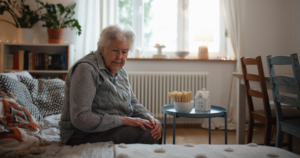
As you get older, staying home more often does not automatically mean you are becoming lazy, lonely, or disconnected from life. Your home can provide something that becomes increasingly valuable with age: safety, comfort, control, and a familiar environment where you can listen to what your body needs.
That does not mean you should stop going outside or avoid other people. It simply means there are some good reasons to make your home a bigger part of your life after 70.
1. Your Home Can Help Reduce Your Risk of Falls
Falls are one of the biggest concerns for older adults, and the consequences can be serious. According to the Centers for Disease Control and Prevention, falls are the leading cause of injury death among adults 65 and older.
Your home may actually be one of the places where you have the greatest ability to control that risk. You know where every step is, which floorboards make noise, where the furniture sits, and which parts of the bathroom become slippery after a shower.
Outside, things become much less predictable. You might encounter a wet sidewalk, unfamiliar stairs, cracked pavement, a crowded store, or a parking lot where someone suddenly walks in front of you.
Research has also found that modifying the home environment with safety features can reduce falls among older adults. Things such as grab bars, better lighting, and non-slip surfaces can make a familiar environment even safer.
A serious fall after 75 can have consequences that go far beyond a bruise or a few sore muscles. Hip fractures, in particular, can lead to lengthy recoveries, loss of independence, and other complications.
Staying home more often does not eliminate the risk of falling, but it can reduce your exposure to unfamiliar environments where you have less control over what happens around you.
2. You May Sleep Better in Your Own Environment
Think about your bedroom for a moment. You probably know exactly how you like it, from the temperature and lighting to the mattress, pillow, blankets, and level of noise.
That familiarity can become increasingly important as you age. Research involving older adults has found connections between bedroom conditions, comfort, noise, temperature, and sleep quality.
At home, you can adjust almost everything. If the room is too warm, you can change the temperature, and if the pillow is uncomfortable, you can replace it with one that works better for you.
That level of control disappears when you stay in a hotel, visit relatives, or spend time in another unfamiliar environment. The bed may feel different, the room may be noisy, and the temperature may not be quite right.
Poor sleep is more than an inconvenience. It has been associated with a range of health problems, including cardiovascular disease, diabetes, cognitive problems, and an increased risk of falls.
Your body needs sleep to repair itself and recover from the demands of daily life. Having a familiar place where you can consistently create the conditions that help you sleep may be one of the quiet benefits of spending more time at home.
3. You Have More Control Over Your Exposure to Illness
Every time you enter a crowded public space, you are exposed to other people and whatever illnesses they may be carrying. You cannot see respiratory viruses, and you usually have no idea who was coughing or sneezing in the same space shortly before you arrived.

As we age, our immune system changes. Older adults can be more vulnerable to infections that a younger person might recover from more easily.
YOU MAY LIKE



This does not mean you need to avoid everyone or spend the rest of your life behind a locked door. It means you can be more strategic about where and when you spend your time.
At home, you have much more control over your environment. You can decide who visits, improve ventilation, wash your hands when necessary, and avoid visitors when someone is feeling unwell.
During periods when respiratory illnesses are spreading, you might also decide to avoid particularly crowded indoor environments. Instead of meeting someone at a packed restaurant or busy event, you can invite them to your home where you have greater control over the surroundings.
The goal is not isolation. It is simply recognizing that your body may need a little more protection than it did decades ago.
4. Staying Home Can Keep Your Stress Levels Lower
Getting out of the house can sometimes be enjoyable, but it can also be surprisingly stressful. Traffic, crowds, unfamiliar places, parking problems, long lines, noise, and having to follow someone else’s schedule can all create unnecessary tension.
Your body responds to stress by releasing hormones such as cortisol. When stress becomes chronic, research has linked prolonged activation of the body’s stress response with problems including cardiovascular disease, diabetes, anxiety, depression, and functional decline in older adults.
At home, you get to set the pace.
You can wake up when you want, have breakfast without rushing, take a break when you feel tired, and spend your afternoon doing something that actually makes you feel good. You are not constantly trying to keep up with someone else’s schedule.
That sense of control matters. Studies have found that older adults can experience lower stress responses when they feel more in control of their surroundings.
There is a big difference between having a quiet day at home because you genuinely enjoy it and being forced into an exhausting schedule simply because you think you are supposed to be busy.
Sometimes slowing down is exactly what your body needs.
5. You Maintain Your Sense of Independence
One of the most valuable things about staying home is the control it gives you over your own day. You decide when to get up, what to eat, what to watch, whether to take a nap, and how you want to spend your time.
That freedom can become especially meaningful later in life.
Healthy aging is not simply about living longer. It is also about maintaining the ability to make choices and participate in life in ways that support your well-being.

Every time you leave home, you naturally give up a little control. You may have to follow traffic, wait for someone else, adjust to a crowded environment, or move at a pace that does not match your own.
None of these things are necessarily bad. But if you constantly force yourself into activities that leave you exhausted or uncomfortable, you may gradually lose the sense that your time actually belongs to you.
There is also an important difference between staying home because you choose to and staying home because you are afraid.
Choosing to spend more time at home because you feel comfortable and healthier there can be an expression of independence. The important thing is that you remain the person making the decision.
6. You Can Have Meaningful Social Connections Without Going Out
One of the biggest misconceptions about staying home is that it automatically means becoming isolated. It does not.
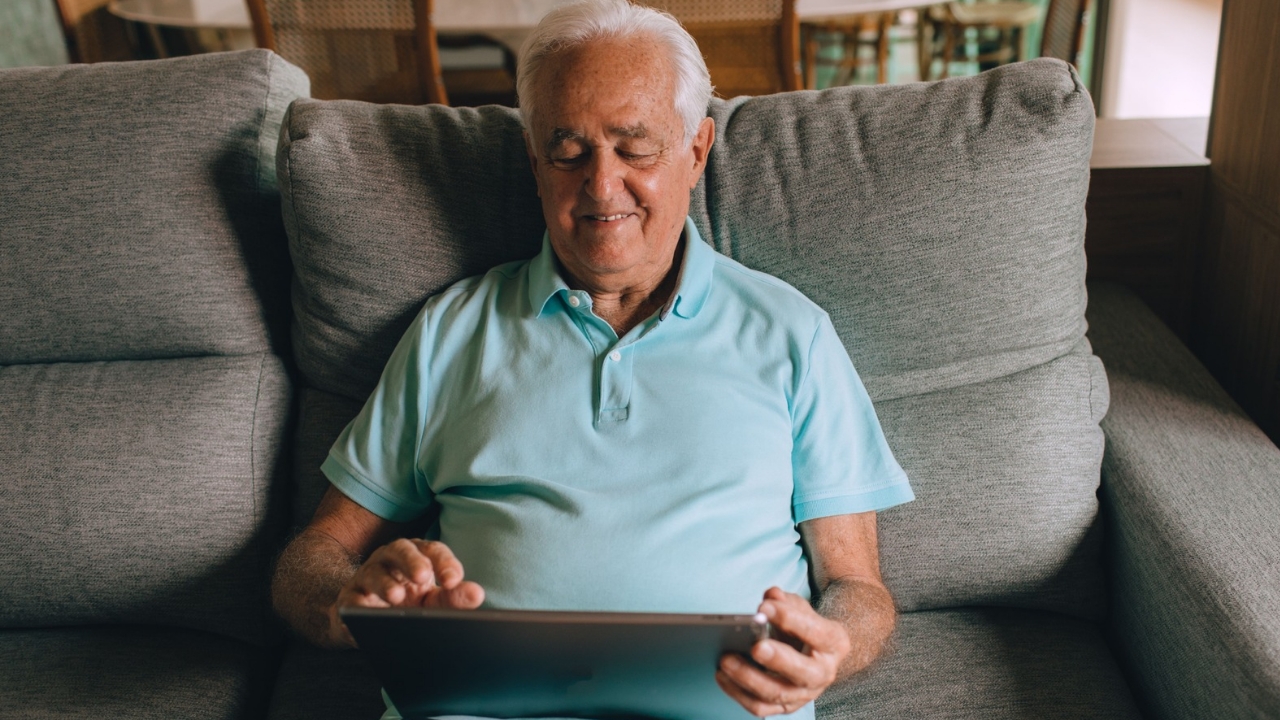
You can have a meaningful conversation with a friend over the phone, invite family members over for coffee, have a video call with someone who lives far away, or sit with a neighbor and talk for an hour.
The quality of a relationship can matter much more than the number of social events you attend. A long conversation with someone you genuinely care about may leave you feeling far more connected than spending several hours in a crowded room making small talk.
Your home can actually make meaningful conversations easier.
You can sit comfortably, hear the other person clearly, make a cup of tea, and take your time without dealing with loud music or a crowded environment. You can focus on the person instead of worrying about everything happening around you.
Social connection is important as we age, but connection does not require constant movement. You do not have to travel across town every week just to prove that you are still socially active.
Sometimes the people who matter most are perfectly happy to come to you.
7. Long-Lived People Have Often Found Purpose Close to Home
Some of the world’s longest-lived communities offer an interesting perspective on what a fulfilling life can look like.
In Okinawa, Japan, one of the regions often associated with exceptional longevity, older adults have traditionally found purpose in simple daily activities, their gardens, their animals, their families, their neighbors, and their communities.
The idea of having a reason to get up each morning is often described through the Japanese concept of ikigai. That purpose does not necessarily require a busy calendar or a constant stream of activities outside the home.

For some people, purpose can be found in tending a garden, caring for animals, practicing a craft, preparing food, helping family members, or simply being involved in the lives of people nearby.
The transcript points to the example of a 102-year-old Okinawan man whose sense of purpose was connected to caring for his two prize bulls. His meaningful daily activity did not require a long trip or an expensive hobby.
That is an important reminder that a purposeful life does not have to be a busy life.
The people living in longevity-focused communities often walk around their neighborhoods, grow vegetables, spend time with neighbors, and enjoy simple routines. Their lives are not necessarily built around constantly being somewhere else.
Staying Home More Does Not Mean Giving Up on Life
There is nothing wrong with going out when you genuinely want to. Seeing friends, visiting family, traveling, attending events, and enjoying your community can all be meaningful parts of life after 70.
The point is not that staying home is always better than going outside. The point is that you do not need to feel guilty simply because your desire to spend time at home has increased.
Your needs can change as you get older. What felt exciting at 50 might feel exhausting at 75, and that does not automatically mean something is wrong.
EDITORS' RECOMMENDATIONS



Your home can give you a safer environment, better control over your sleep, lower exposure to illness, less stress, more autonomy, and plenty of opportunities for meaningful connection.
If staying home makes you feel peaceful, comfortable, and connected to the people and activities you care about, there is no reason to apologize for it.
Conclusion
Getting older does not mean you have to spend your days rushing from one appointment, event, or social gathering to another. The examples of long-lived people show that a meaningful life can be built around simple routines, familiar surroundings, close relationships, and activities that give you a reason to get up each morning.
Staying home more can help you reduce certain risks, sleep in an environment you control, manage stress, protect your independence, and maintain meaningful relationships without constantly being on the move.
There is also an important distinction between staying home because you have chosen a lifestyle that feels right for you and staying home because fear has taken control of your life. If you simply prefer a slower pace these days, listen to what your body is telling you.
You do not have to keep apologizing for wanting a quieter life. Sometimes, slowing down, staying close to home, and living deliberately can be exactly what makes this stage of life feel better.