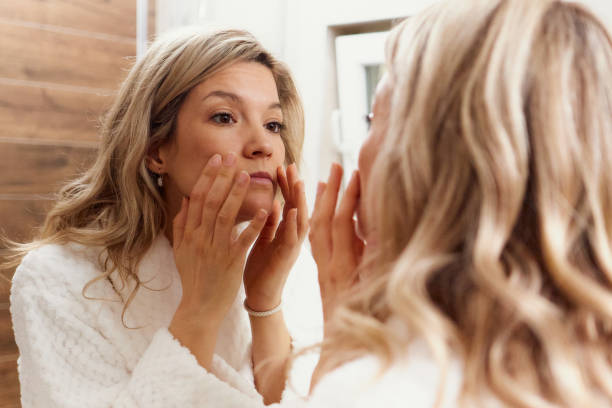
You know that moment when you look in the mirror and think, “Wait… when did that happen?”
I’ve had that moment. And funny enough, it didn’t show up when I relaxed into life. It showed up when I declared war on aging.
Here’s the twist: psychology says the face often ages fastest during the years people obsessively try to stop aging. That sounds backward, right? But once you understand the stress, tension, and mental load behind “anti-aging,” it makes uncomfortable sense.
Let’s talk about it like friends.
The Decade I Declared War on My Own Face
I remember the exact year I started fighting my reflection.
I bought every “anti-aging” cream I saw. I analyzed photos under bright light. I stretched my skin in the mirror to imagine what I’d look like tighter, smoother, younger.
And here’s what I didn’t realize: I trained my face to stay tense.
When you constantly monitor your appearance, you:
- Furrow your brow without noticing
- Tighten your jaw during stress
- Squint at imaginary flaws
- Raise your eyebrows in silent panic
Those tiny muscle contractions add up. Your face contains over 40 muscles, and when you overuse them in stress patterns, you carve lines into your skin.
IMO, the real issue isn’t aging. It’s the anxiety about aging.
Psychology calls this appearance-based self-surveillance. When you monitor yourself constantly, you activate stress responses. And stress directly affects skin elasticity, collagen production, and inflammation.
So the very fear of wrinkles starts helping them form.
That’s not poetic. That’s biology.
What Happens to a Face Under Siege
When you treat your face like a problem to fix, your body reacts like you’re under threat.
Your brain doesn’t know the difference between “I look old” panic and real danger. It triggers cortisol. And cortisol changes everything.
Here’s what chronic stress does to your face:
- Breaks down collagen and elastin
- Slows skin repair
- Increases inflammation
- Deepens expression lines
- Disrupts sleep (which wrecks skin recovery)
You also change how you hold yourself.
Think about someone constantly worried about looking older. They often:
- Press their lips tightly
- Pull their neck muscles inward
- Hold tension around the eyes
- Avoid smiling naturally
Over time, that tension becomes your default setting.
Your face reflects your mental state. When you live in subtle self-criticism, your facial muscles stay guarded.
And guarded faces don’t glow. They brace.
I noticed this in old photos of myself. During my “anti-aging” phase, I smiled less freely. I checked my angles. I looked… controlled.
Ironically, control made me look older.
The Year Everything Shifted
One year, I got tired. Not physically — emotionally.

I stopped chasing miracle products. I stopped zooming into my pores. I stopped asking, “How do I look younger?” and started asking, “How do I feel?”
The shift happened when I focused on:
- Sleeping better
- Laughing more
- Moving my body for joy
- Spending time with people who didn’t care about my forehead lines
Within months, something changed.
My skin didn’t magically erase every line. But it looked softer. Brighter. More alive.
Why?
Because relaxed faces age slower than stressed faces.
When you release chronic tension:
- Blood flow improves
- Facial muscles soften
- Natural expressions return
- Skin repair improves
You look like yourself again. Not a version fighting itself.
And FYI, that shift felt better than any cream ever did.
The Science of Letting Your Face Be Your Face
Now let’s talk real science behind “Psychology says the face ages fastest during the years people spend fighting aging.”
Your mind directly influences your skin.
Here’s how:
1. Stress Hormones Accelerate Visible Aging
Chronic cortisol reduces collagen production. Collagen keeps skin firm and elastic.
Less collagen = more sagging and lines.
When you obsess over aging, you maintain stress. That stress literally speeds up visible aging.
2. Negative Self-Talk Changes Expression Patterns
When you criticize your appearance daily, you create micro-expressions of worry and dissatisfaction.
Over time, repeated expressions create:
- Forehead lines
- Frown lines
- Tight jaw definition
- Hollowed eyes
Your face remembers your emotions.
3. Chronic Tension Becomes Structural
Facial muscles shorten with repeated tension.
That creates:
- Downturned mouth corners
- Pulled eyebrows
- Neck tightness
- Resting “serious” face
People often assume these changes result purely from age. But tension plays a huge role.
4. The Placebo Effect Works Both Ways
If you believe you’re aging badly, you behave like someone aging badly.
You:

- Stress more
- Sleep less
- Smile less
- Withdraw socially
Those behaviors accelerate aging.
But when you believe you’re aging well, your behavior shifts. And behavior shapes appearance.
This isn’t wishful thinking. It’s behavioral psychology meeting biology.
What Preservation Actually Looks Like at Seventy-Three
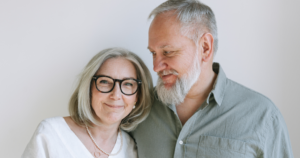
I once met a seventy-three-year-old woman who changed how I see aging.
She had wrinkles. Deep ones. She had soft skin and silver hair.
But her face looked open.
She smiled with her entire face. Her eyes crinkled fully. Her cheeks lifted naturally. No bracing. No pulling.
She told me she stopped trying to look younger at fifty.
Instead, she focused on:
- Walking daily
- Eating simple whole foods
- Staying socially connected
- Laughing often
- Accepting each new line as proof of life
Her skin didn’t look tight. It looked lived in.
And here’s the key: She didn’t fight her face. She collaborated with it.
That collaboration reduced stress. Reduced tension. Reduced self-surveillance.
She looked vibrant. Not young — vibrant.
And honestly, vibrant beats artificially frozen every time.
The Uncomfortable Truth
Here it is.
The beauty industry thrives on insecurity.
When you believe aging equals decline, you stay anxious. Anxiety sells products.
But psychology shows something powerful:
Self-acceptance reduces stress, and reduced stress slows visible aging.
That doesn’t mean you stop caring for your skin.
It means you shift from:
- Fighting → Supporting
- Criticizing → Nourishing
- Monitoring → Living
There’s a massive difference between caring for your skin and attacking it.

Healthy skincare looks like:
- Wearing sunscreen
- Staying hydrated
- Sleeping enough
- Eating balanced meals
- Managing stress
Obsessive anti-aging looks like:
- Checking mirrors constantly
- Panicking over one line
- Layering harsh treatments
- Living in comparison
One approach builds resilience. The other builds tension.
Your face tells the story of your inner climate.
If your inner climate stays stormy, your skin shows it.
If your inner climate relaxes, your skin reflects that too.
So What Should You Actually Do?
If you want your face to age well — and I mean truly well — start here:
- Reduce appearance-based stress.
- Stop hyper-analyzing photos.
- Smile fully, even if it creates lines.
- Prioritize sleep like it’s skincare.
- Move your face naturally and often.
And maybe most importantly:
- Practice neutrality about your reflection.
You don’t have to adore every wrinkle. You just don’t need to treat it like a crisis.
When you stop declaring war, your nervous system calms down.
When your nervous system calms down, your face softens.
And softness reads as youth more than tightness ever will.
Aging Isn’t the Enemy
Psychology says the face ages fastest during the years people spend fighting aging — and honestly, that insight changed how I live.
I wasted years trying to outsmart time.
Time didn’t need defeating. It needed partnership.
Your face isn’t betraying you. It’s recording your life.
You can spend energy fighting it.
Or you can spend energy living fully — laughing hard, sleeping well, loving deeply.
And funny enough, the second option usually makes you look better.
Maybe the real anti-aging secret isn’t resistance.
Maybe it’s relief.